Tag: history

  • The Story of Susanna M. Salter, the First Woman Mayor of the U.S.

    Very often, when telling the history of women’s suffrage, we focus only on the major achievements, telling the stories of the most recognizable activists such as Elizabeth Cady Stanton or Susan B. Anthony. Before the 19th Amendment was ratified by the U.S. Congress and Senate in 1920, women had been fighting for over 150 years to attain the right to vote. By telling the story of lesser-known women who also fought and rallied for the rights to vote, we contribute to an unequivocally more inclusive timeline of general suffrage history.

    It was 1789 when the state of New Jersey became the first to allow any person with property, regardless of sex and race, to vote. The progressive decision would only last for eight years, but it set the beginning of a long century of reforms and activism, the perfection of democracy and the first steps towards the recognition of men and women as equals. The protagonist of today’s article was born on March of 164 years ago in Lamira, a small community in Ohio. Her name was Susanna M. Salter and I encourage everyone to read along to discover how she became the first woman mayor in the history of the United States. 
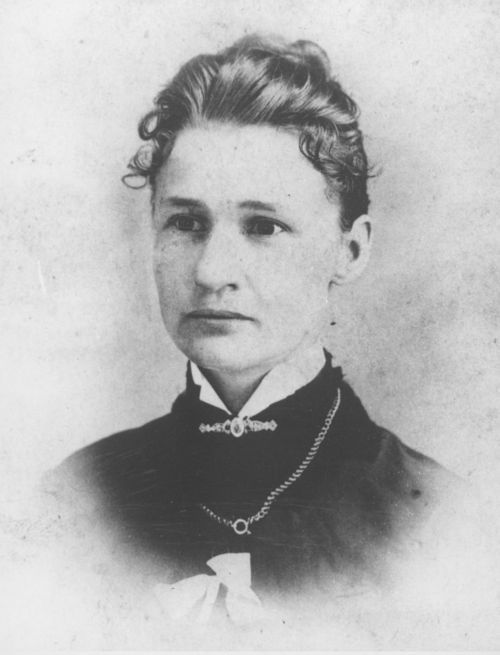
    A picture of Susanna M. Salter taken around the same year that she was elected as mayor of Argonia.

    Daughter of Quaker parents, she was the descendant of the first English settlers that arrived to the United States with William Penn. After living her youth in Silver Lake and whilst in school, she married Lewis Allison Salter and together with her parents they moved to a little farm in what would, in 1881, become the small city of Argonia in Kansas. Shortly after her marriage, Salter became involved with the recently founded Woman’s Christian Temperance Union (WCTU). An important player in the Temperance Movement against the consumption of alcohol that would eventually culminate with the 18th Amendment, the WTCU became already by 1890 the largest women’s organization in the world. 

    The rapid growth of the Union in the late 19th century translated into the involvement of the WTCU in other political issues such as those related to prostitution, labor and, most notably, suffrage. Under the direction of Frances Willard, the organization adopted the motto “Do Everything” and, as it got involved more into politics, its role in the eventual passing of the 19th Amendment also became bigger in parallel to other more recognized organizations such as the NWSA or the AWSA.

    In 1887, Kansas — that some years before had been the first state to hold a referendum on women’s suffrage — became also one of the first states to grant women the vote in municipal elections. That same year, Argonia, having been established as a municipality in 1885 and with a population of about 500 people, held its second municipal elections and the first in which women could vote. The previous term had elected Salter’s father as the mayor and her husband as the clerk, which, added to the fact that she was a member of the WTCU made her a quite popular character in the small city of Argonia. 

    Just as it happens every time that progress is made, the news of a woman’s enfranchisement in the upcoming municipal election was met with opposition amongst many men in Argonia. On top of that, the WTCU chapter in the city announced that it would support any candidate who made alcohol and tobacco prohibition a top priority in their political program. A group of men who believed that politics should be reserved for their sex decided to play a trick on the WTCU slate of candidates. As chance had it, the only eligible woman of the WTCU Argonia’s chapter was Salter; the men partaking in the complot copied the slate of the organization but changed the name of the mayor candidate to her first name, Susanna. Thinking that no men would vote a woman as mayor, without the knowledge or consent of Susanna, they printed the ballots and hoped that their little trick would undermine the prestige of the WTCU and demonstrate that women should not play any role in politics. 

    The morning of the election, Salter was contacted by the Republican party once one of its members noticed her name on the ballot. Asked if she would serve if elected, Salter responded affirmatively and after a quick meeting with the representatives of the party received their official support. Together with the support of the Prohibition Party, politically aligned with the WTCU, she ended up receiving two thirds of the total votes. What started as a trick from a group of angry men had ended with the election of Salter, 27 years old at the time, as the first ever woman mayor in the history of the United States. 

    Her election caused a sensation among the newspapers of the whole nation, and during her year as mayor she was visited by many correspondents from other states, making the little city of Argonia into a temporary tourist hot-spot. Even though her term as mayor lasted only for one year, the news of her election crossed borders as she received letters of congratulation from countries such as France, Germany or Italy. 
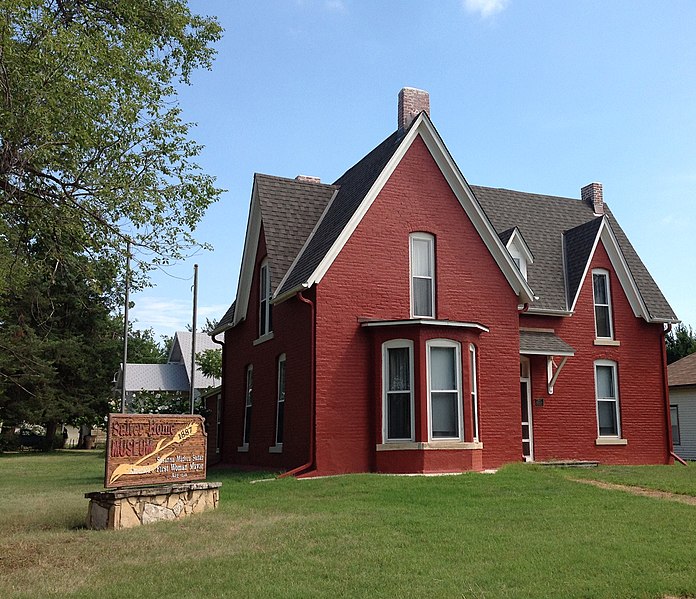
    The house of Susanna M. Salter in Argonia, today turned into a museum and part of the National Register of Historic Places.

    One of these letters, from Willard, the president of the WTCU, encouraged Salter to write “a note that I can read to audiences, showing the good of woman’s ballot as a temperance weapon and the advantage of women in office”. The following years allowed her to become a speaker in women’s suffrage conventions sharing, at least once, the stage with Susan B. Anthony. 

    Shortly after Salter’s term in office and choosing not to continue a career in politics, the whole family moved to Oklahoma and eventually settled, after her husband’s death in 1915, in Norman, a bigger city where her children could attend university. Little is known about her later years and, although she remained interested in politics for her whole life, she never sought to be re-elected or took any relevant political roles after her one-year mayor term. 

    Susanna M. Salter died in 1961, at age 101, in Norman, Oklahoma, although she was buried in the still today little city of Argonia, the place that made her the first ever woman to be elected as mayor in the United States. 

    Sources


    About the author

    Dario is a student in American Studies at the University of Amsterdam. He has previously completed a bachelor in History at the University of Zaragoza and bachelor in Communication at the Universitat Oberta de Catalunya. During his bachelor years, he also had the chance to study abroad in countries such as the U.S., Italy or Romania, which have made him specially interested in transnational movements and perspectives. He is currently writing a dissertation on the unpublished autobiography of Vaughn Love, one of the African Americans who fought in the Abraham Lincoln Brigade during the Spanish Civil War. In his free time, Dario is also a member of the Young Minds Network of the John Adams Institute in Amsterdam.

    For more information about the Young Adams Institute, check out https://www.john-adams.nl/.
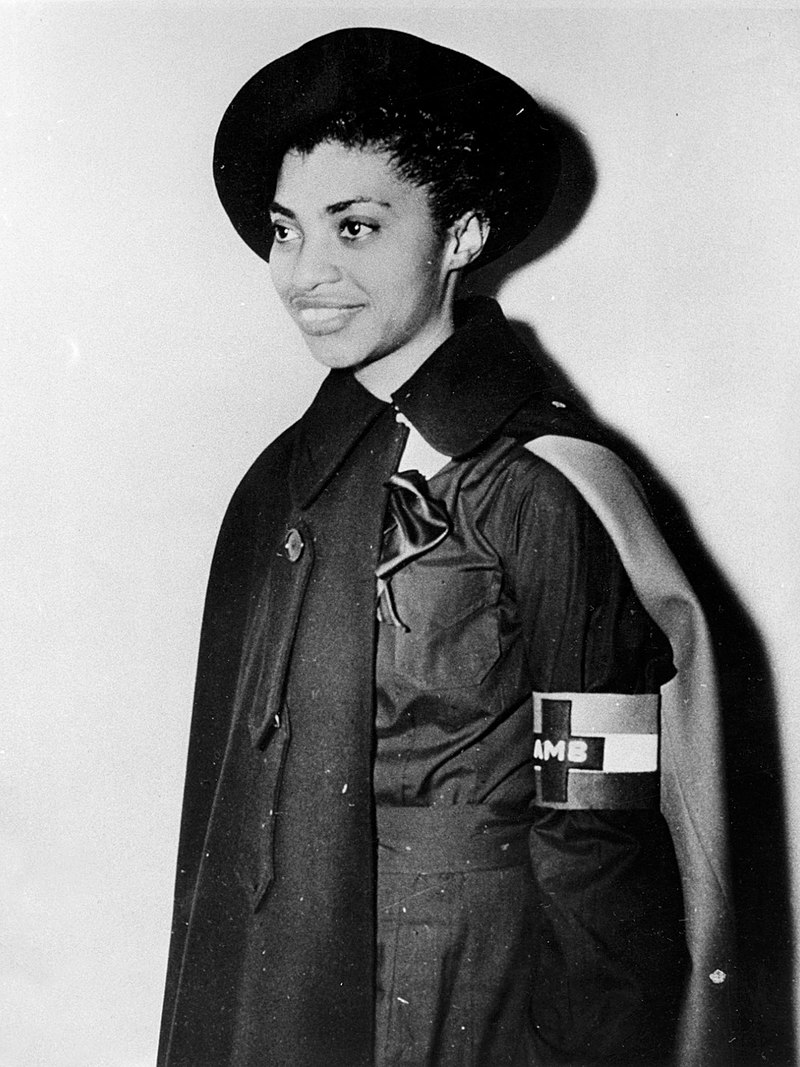
  • Salaria Kea, an African American nurse in the Spanish Civil War

    Salaria Kea, born July 13th 1913 in Georgia, the “Empire State of the South”, is the first woman in this series of short articles dedicated to Women’s History Month. Instead of writing about some of history’s better known characters, we have decided to focus on those great American women who forever changed history and whose memories we ought to do justice to, but who have often been forgotten or silenced.  

    Salaria Kea has a Wikipedia page, and is the subject of a couple of book chapters and a few scattered journal articles, but if we mention her name, even among historians, no one seems to know who she is. A nurse by profession, Salaria Kea was to become the only African American woman to fight fascism in the Spanish Civil War of 1936. But she was more than just a nurse: her life is a journey of activism, participating in the early path towards the Civil Rights Era, whilst also rallying for international causes such as opposing the Italian invasion of Ethiopia in 1935.

    A picture of Salaria Kea taken sometime during the Spanish Civil War, on it we see her wearing the military medics uniform of the International Brigades.

    Born in the deeply segregated American South, Kea faced challenges and adversity from an early age. After the death of her father, stabbed whilst he was working at a Sanitarium, her mother had to leave 6-month-old Salaria and her 3 older brothers in the care of family friends to be able to work and raise her children. But after two years, her mother returned to Georgia to marry a farmer, and Kea remembers that her brothers had to take care of her while her mother was away. It was her brothers who, working small jobs instead of going to school, ensured that at least the youngest sister could pursue an education. 

    It was during the last summers of high school, while working at a local doctor’s office, that Kea was introduced to her calling and future profession: medicine. But it was not that easy for her, and suffering from the harsh segregation laws of the South, she watched one school after the other deny her entry simply because of the color of her skin. Following the path to the North that many African Americans had to embark upon after the Great Depression, Salaria headed for New York. It was 1930 when she finally got accepted in the Harlem Hospital School of Nursing. 

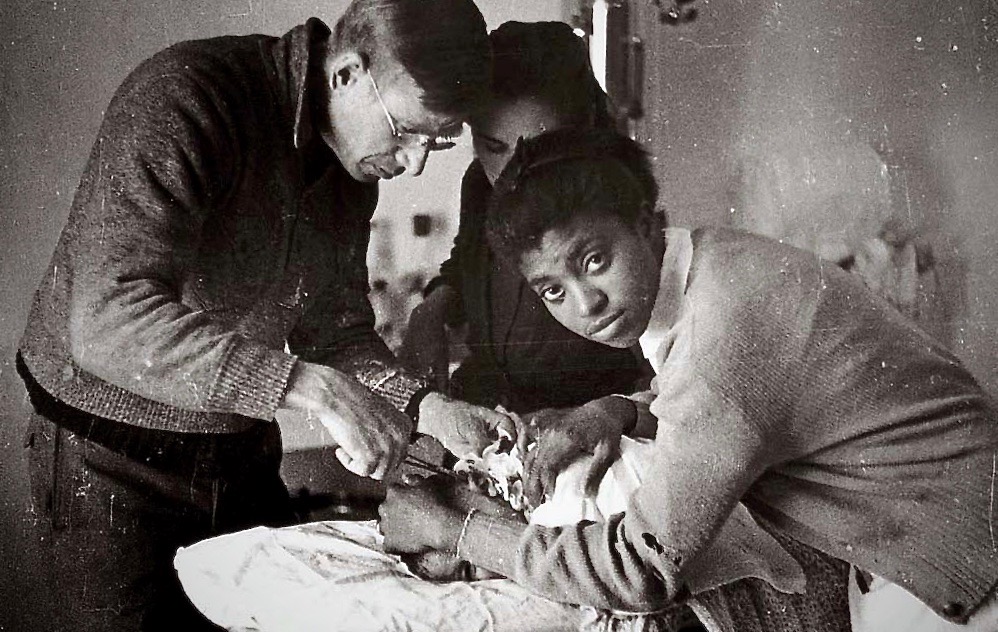
    Salaria Kea operates a soldier wounded during the Spanish Civil War.

    Almost 30 years before the now-famous Greensboro sit-ins, Kea and some of her schoolmates, protesting the racial segregation rules of the school, rejected to stand up from a “Whites Only” table at the dining room. Kea’s first experiences in organized protest eventually led to the school ending segregation in the dining areas. In 1934, she graduated and, shortly after, started to work in various hospitals where, meeting with the most progressive nurses, she increasingly became more politicized. 

    When in the Fall of 1935 the fascist troops of Mussolini invaded Ethiopia, Kea was ready to get into action to support what was hailed as the last free country in Africa. Together with other nurses, they raised enough money to send 75 beds to Ethiopia. When the troops of Mussolini, following Franco’s coup d’etat in 1936 entered the Spanish peninsula, Kea knew it was her call to volunteer to fight for the antifascist Spanish Republican side. 

    On March 27, 1937 Kea sailed for Spain aboard the Paris. Following the path of around 2,800 other American volunteers to fight in the Lincoln and Washington Brigades, she would be the only African American woman amongst them (in total around 85 African American men would also fight for the International Brigades). Assigned to a medical unit, Kea was responsible, during her first months in Spain, to turn the abandoned summer residence of king Alfonso XII into the Hospital Villa Paz. The old palace had been occupied by cattle, infested by mosquitos, and the plumbing and electricity were no longer working. 

    The front and end page of the 1938 pamphlet A Negro Nurse in Spain, which narrated the life of Salaria Kea and was used to raise money for the Spanish Civil War.

    Kea noticed that amongst the Republican women helping to fix the building into the hospital, most of them could not read, and so together with other international nurses, and in only six months, not only did they finish the project, but also taught everyone who worked there how to read and write. Soon the hospital, that never ceased to be operated in the harshest conditions, was filled with Ethiopians, Cubans, Americans, Italians, Germans and all the nationalities of the international brigades. 

    During the Aragon Campaign in early 1938, Kea was moved to the front to treat the patients that were in most urgent care and couldn’t be moved to the hospitals. In a pamphlet published shortly after her return to the U.S., she remembered how, in the midst of the battle, with planes of both sides flying above, “they battled just over our hospital unit. We could hear the stray bullets as they fell through the olive trees.” 

    During one of the fascist bombings, Kea lost the rest of her unit and had to hitchhike all the way back to Barcelona, where, in the last attempt to resist the fascist advance, the international troops had been stationed. But with the powerful German and Italian aviation supporting Franco’s army, it was only a matter of time before the International Brigades and the Republican troops would be forced to retreat. And so, sometime in March 1938, one of the bombings left Kea under 2 meters of rubble and, seriously injured, she was eventually sent back to the U.S. 

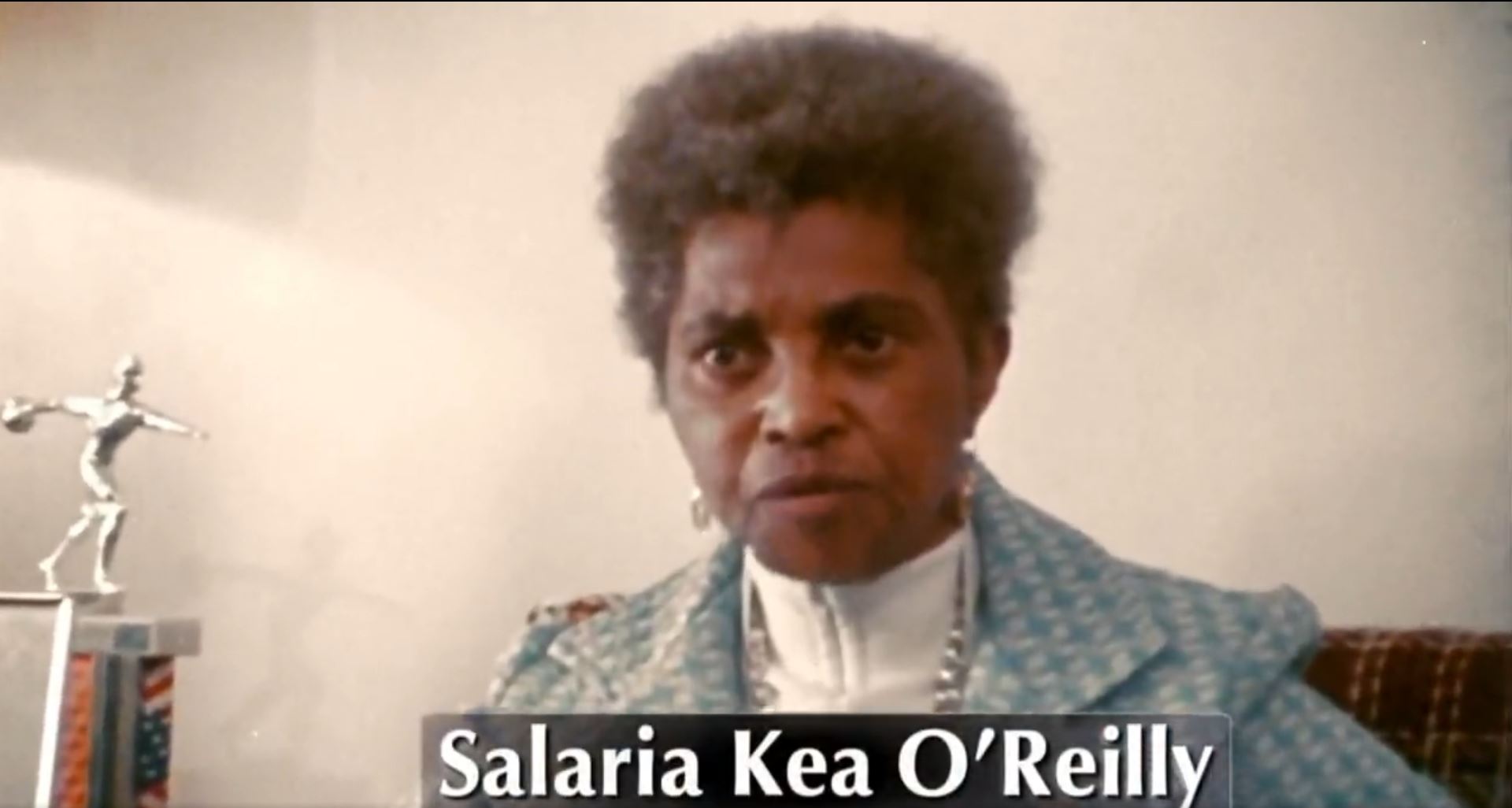
    Salaria Kea explains during an interview the reasons for which she decided to volunteer for the Spanish Civil War.

    Back in New York, she continued to organize convoys of medical supplies to be sent to Spain and, after the International Brigades where finally dismantled and survivors returned home, she was also active amongst the Veterans of the Abraham Lincoln Brigade (VALB for short, now Abraham Lincoln Brigade Archives, the organization behind the archive collections and whose activities keep the memory of all the American volunteers and their struggle against fascism in Spain alive). In a 1938 pamphlet narrating her story to raise funds for the still ongoing war, she ends with a note: “Surely Negro people will just as willingly give of their means to relieve the suffering of a people attacked by the enemy of all racial minorities, – fascism – and it’s most aggressive exponents – Italy and Germany.”

    After the civil war in Spain ended, Kea would also fight overseas as a nurse during WWII. Back home in Akron, Ohio, Kea and her husband, John O’Reilly – an Irish volunteer of the International Brigades that she met and married while they were in Spain – would live a peaceful life still working against fascism, “the enemies of the world”, as she would put it. On May 18th, 1990 Kea passed away in her home. 

    Hers was a life of struggle and activism, of constant opposition to the hardest realities of the world: discrimination and fascism. Her story is one of intersectionality, as a Black woman and a nurse in a war that was happening thousands of kilometers away from her home. Today, this month, but forever, we ought to remember and honor the life and legacy of Salaria Kea.

    Sources


    About the author

    Dario is a student in American Studies at the University of Amsterdam. He has previously completed a bachelor in History at the University of Zaragoza and bachelor in Communication at the Universitat Oberta de Catalunya. During his bachelor years, he also had the chance to study abroad in countries such as the U.S., Italy or Romania, which have made him specially interested in transnational movements and perspectives. He is currently writing a dissertation on the unpublished autobiography of Vaughn Love, one of the African Americans who fought in the Abraham Lincoln Brigade during the Spanish Civil War. In his free time, Dario is also a member of the Young Minds Network of the John Adams Institute in Amsterdam.

    For more information about the Young Adams Institute, check out https://www.john-adams.nl/.