
Tag: fiction

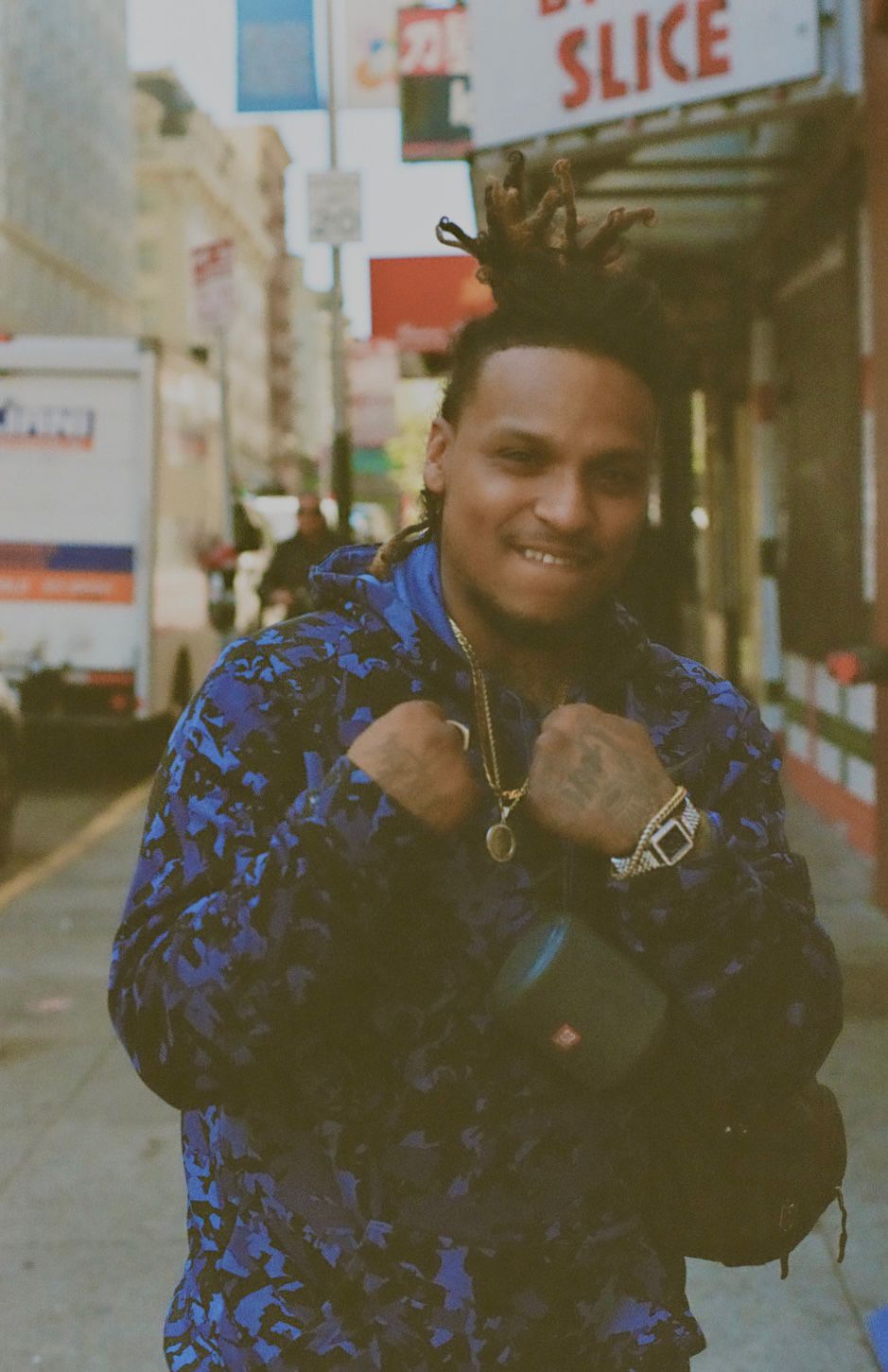
  • “I’m posing for you!”

    While most Dutch people will often shy away from the invasive sight of a camera lens pointing toward them (it would be an infringement of our privacy after all), the exact same thing can ignite a very opposite response among Americans.

    On my first day back in San Francisco, I chose to meander along its hilly roads to restrengthen the few muscles I was left with after doing very little intensive hiking in the Netherlands. This would also be my very first time properly shooting film in a city setting – and in general, it was really pretty much my first time experimenting with street photography overall. Over time, I had grown much more comfortable taking shots of my loyal (and particularly patient!) golden retriever as she skipped her way through muddles and puddles alike, sat still atop tree trunks or diligently listened while I asked her to “sit and stay” at the most random of moments, or even more preferably I liked taking photos of non-moving models like flowers and plants. I had not quite dared to venture in the realm of human photography before, besides taking pictures of friends or family members of course. There is a certain awkwardness that needs breaking, and I personally believe there has to be some consent that I not yet had the guts to ask for.

    Making my way along North Point from Fisherman’s Wharf to the Palace of Fine Arts, my newly-acquired yet trusty film camera dangled on my chest with each strutting step. I had a total of 36 shots to fill (realistically more like 30, knowing there would be bound to be more than one failed attempt), and I was keen to eventually capture more of a personal face to San Francisco besides just shots of its unique mix of architecture, old cars and oversized American flags. As I walked down a road of expensive mansions with over-the-top Halloween decorations (one sign read: “No trespassing: we’re tired of burying the bodies” with some blood plattered over and around the lettering), a man dressed in a blue overall one block away seemed to be staring right at me in complete stillness. From afar, a small part of my brain even entertained the thought that one of these houses had decided to decorate their front yards with a life size old-timey scarecrow. Once I came closer, I realised that was not the case (bummer, because if it had been, I for sure would have taken a photo!) and instead it was a middle aged man gently smiling right at me, the corners of his lips tucked upwards and pinching into his cheeks. I smiled back and nodded my head at him in acknowledgment and respect, still getting into the level of street niceties common in the U.S. (a few minutes prior to writing this, a man told me “God bless you” as we passed each other on a street corner down in Mission – people are truly kind here).

    “Ah, I was posing for you!” he jokingly called out as I had almost made my way past him – head instinctively lowered to reduce any form of further awkwardness. We briefly continued to quip back and forth, talking about how I would have felt too self-conscious to click away at him as much as I wanted to, while he instead instilled that I can (and should! He had recently seen the movie Civil War and felt in awe at the courageousness of the journalist on the front lines of the war) on the account of it being San Francisco where you can “do as you want”. By telling me this, in a tone so jovial that I couldn’t help but feel instantly relieved and comforted by his words, he helped me break down some of the highest bricks that constructed the barrier I had to climb in order to feel comfortable documenting street life. Just as I was about to ask whether I could perhaps take his photo – I could already imagine the way his kind face would reflect on film and was itching at the prospect – the garage door opened up behind him and it was time for him to get back to work. Uncertain whether to linger around and if anything, at least ask, I didn’t quite take long enough to linger on that thought and instead thanked him for his time, advice and confidence and continued on.

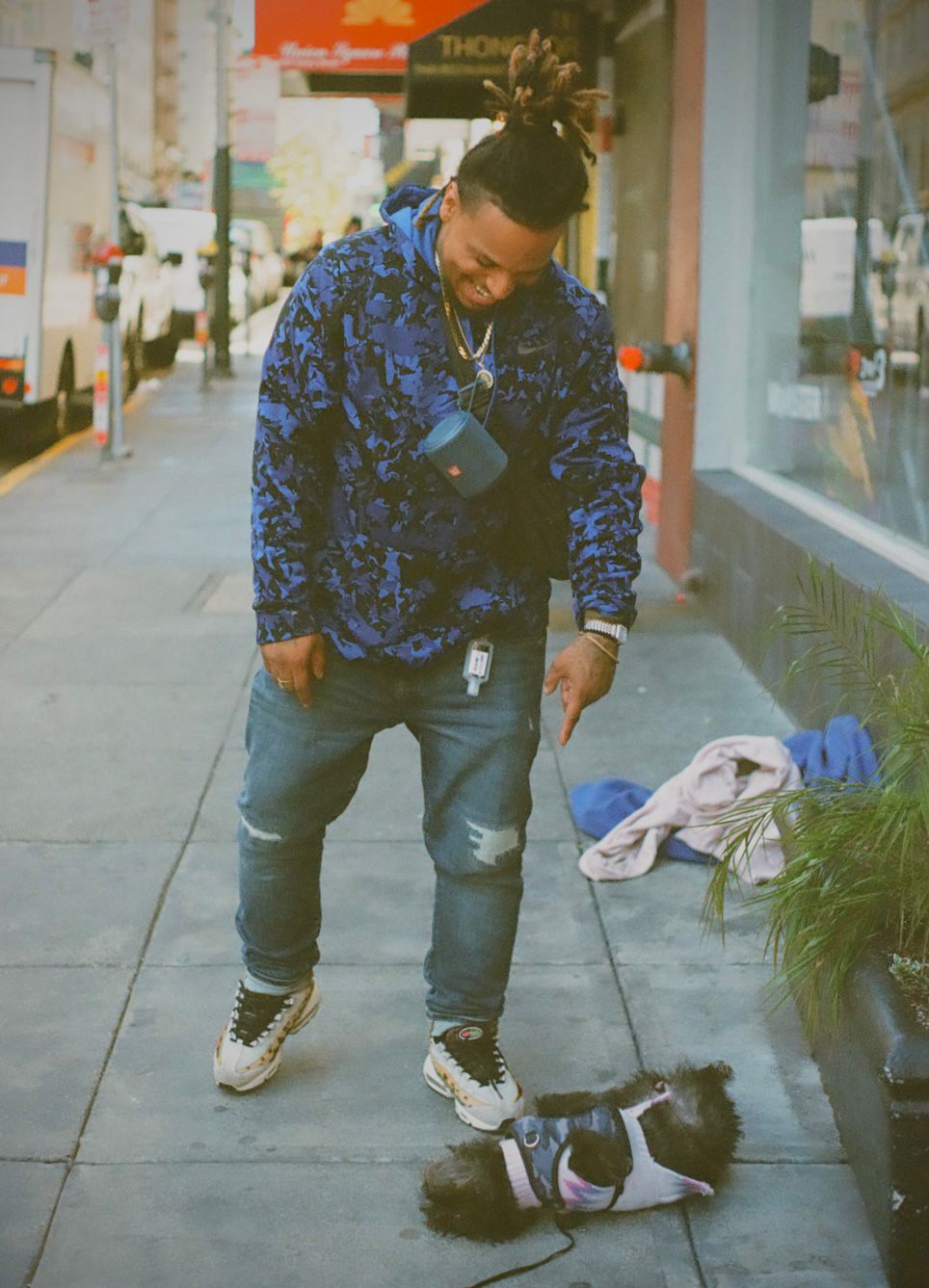
    For most of the day, I regretted not taking his photo. I replayed the conversation in my mind more than once and thought of all the conversational gaps during which I could have mustered up enough confidence. But ultimately, I had to accept that some things simply aren’t meant to be. Besides, a few days later, once I’d grown more accustomed to interacting with people on busy streets, someone else jokingly told me he was instinctively posing at the sight of my camera. I responded that I would love to take his photo, and I did. It isn’t the best thing I’ve shot, it isn’t even particularly good, as his face is out of focus and the light seems to fall flat. But what I saw looking at him through the little viewfinder on my camera was pure joy and playfulness. And confidence – the American amount, of course. I’m glad I got to capture that.
  • Quannah Chasinghorse, a Native American walking between the worlds of fashion and activism

    Growing up, Quannah Chasinghorse, a Native American from Hän Gwich’in and Oglala Lakota descent was discouraged to become a model by the lack of her people’s representation in the fashion industry. But in 2021, at the age of 19, she would make the headlines for walking the MET Gala with a Native American outfit and for showing her distinctive traditional face tattoos. A documentary released in September of last year and titled Walking Two Worlds shows that, besides being a model, Chasinghorse also has an extensive record on Native American rights and climate change activism.

    Chasinghorse was born in 2002 in the Navajo Nation of Arizona. Her mother Jody, also a Native American and climate change activist, is Hän Gwich’in, a First Nation with an estimated population of 310 and located in Alaska and the Yukon territory in Canada. Her father is Oglala Lakota, a Native American people living in North and South Dakota with an estimated population of about 115,000. Raised by her mother and two older brothers, she spent her early childhood between Mongolia, Arizona and New Mexico. At age 6 she moved to Alaska, her maternal homeland, where she was raised in the traditional customs of the Hän Gwich’in. As just a kid she remembers fishing, hunting, chopping wood and being transported by a dog team. After Chasinghorse’s mother got a promotion at her job they all moved to Fairbanks, back in Arizona, where she would spend her teen years. 

    In the city, Chasinghorse became involved in protests against the drilling of the Arctic National Wildlife Refuge, a project approved by president Donald Trump that threatened to drill millions of acres in Alaska. Drawing the connection between Native American Rights and environmental activism came naturally, and shortly after the protests she also served in a Native American local council educating on the ways of life and defending the original land of the Hän Gwich’in. Whilst speaking at climate rallies, she also started working with the Alaska Wilderness League, the lead organization fighting to protect the Arctic Refuge. In a press commentary reminiscing on the reasons for her involvement in climate change activism, she explained: “Our way of life is at risk. Our culture, all of those things that make us who we are, that make our identity.” 

    Chasinghorse and her mother during a trip to Washington to met with different activists and U.S. representatives and discuss the implications of Native American land exploitations”

    Her career as a model started a few years later, in 2020, when she was approached by a casting agent, whilst she was participating in a get-out-the-vote activity – Native Americans have been suffering disenfranchisement for centuries and have one of the lowest voting turnouts in every election –. In her first modeling campaign for Calvin Klein she would appear showing her traditional face tattoos, called Yidįįłtoo, that are linked to a Hän Gwich’in rite of passage and important moments in life. Her appearance, defying the western fashion standards became highly popular and soon she signed her first contract with a big agency. Since then, she has been featured in many of the most important fashion magazines such as Vogue and has posed for brands like Chanel or Ralph Lauren.

    Amongst her most “iconic” moments are the 2021 MET Gala red carpet. Wearing a dress inspired by Native American style and jewelry from the Navajo Nation she made the headlines both for her unique appearance and for defying the theme, “In America: A Lexicon of Fashion” by wearing non-western fashion elements. Later Chasinghorse would admit on social media that “After a while of trying to fit in in a space where there is a huge lack of indigenous representation, I just started focusing on why I went in the first place”. The relationship of the fashion industry often clashes with climate change activism, Chasinghorse recognizes, but she is also aware that “you have to be at the table where they’re making these decisions”. She now uses her growing influence in social networks to amplify her activism and is often, almost daily, posting about different environmental, social and Native American causes.

    Quannah Chasinghorse at the 2021 MET Gala wearing a dress by Peter Dundas and the jewelry of the former Miss Navajo Nation Jocelyn Billy Upshaw

    Shortly after initiating her career as a model, Chasinghorse was contacted by Maia Wikler, a candidate in a political ecology PhD at the University of Victoria. Wikler, who knew Chasinghorse from her activism work in 2019, pitched her the idea of making a documentary about her career in activism. After a long pandemic with continuous filming pauses, the work Walking Two Worlds was released. The short piece, about half an hour long, features the life of Chasinghorse and aims to highlight her activism journey to engage more people in the Alaskan climate situation. 

    The title of the documentary is also a reference to a tension that Chasinghorse faces in her career and social activism. As one of the first Native American models to be featured by big fashion brands, the first with traditional face tattoos, she feels loneliness and loss of identity from her roots. She would be walking, figuratively, between an “indigenous way of life” and the “modern world”, as phrased by Chasinghorse’s mother in the documentary. After moving to Los Angeles to continue modeling, Chasinghorse felt anxiety attacks from being away from her homeland. In a poem featured in the documentary she expresses her feelings as a walker between two worlds:

    I’m from the beaded moose hide in modern 
    clothes, the smell of sage, the taste of fry bread.

    I’m from the trees, fireweed trails, 
    mushing, and nature walks.

    In the Birch tree I used to climb,
    those long-lost limbs I remember 
    as if they were my own.

    From the hunting, fishing and berry picking trips,
    the potlatches and the legends our elders tell.

    I am from the Hän Gwich’in, Lakota
    and Navajo family.

    Besides these tensions in Chasinghorse life, her career keeps going on swiftly. In the recent March 2024 Oscar’s Gala, she wore again a Native American inspired dress and traditional jewelry. At only 21, she defies western fashion whilst serving as an inspiration for many Indigenous people around the world. Quannah Chasinghorse, model and activist, is an example proving that walking two worlds is possible.  

    At the very recent Oscar’s Gala, Chasinghorse once again attended wearing a dress that honored Native American fashion and jewelry

    About the author

    Dario is a student in American Studies at the University of Amsterdam. He has previously completed a bachelor in History at the University of Zaragoza and bachelor in Communication at the Universitat Oberta de Catalunya. During his bachelor years, he also had the chance to study abroad in countries such as the U.S., Italy or Romania, which have made him specially interested in transnational movements and perspectives. He is currently writing a dissertation on the unpublished autobiography of Vaughn Love, one of the African Americans who fought in the Abraham Lincoln Brigade during the Spanish Civil War. In his free time, Dario is also a member of the Young Minds Network of the John Adams Institute in Amsterdam.

    For more information about the Young Adams Institute, check out https://www.john-adams.nl/.