
I have been learning more about the role of American musical influences in the Netherlands this year. More specifically, the digitalization of music studio equipment has made it easier for global artists to work together over web chat or email. I am interested if this is shaping artists’ minds, expectations, and sense of identity. In this interview, Amsterdam jazz musician and beatmaker, Stan van Dijk, helps me learn more about the cross-culture inspirations and the meanings in his own music.
I discovered Stan’s music through a collaboration he did with a Northeast Ohio artist that goes by the name Unc D. I was mutual Instagram friends with Unc D before moving to the Netherlands from Ohio. Unc D sent me the song they made together since he knew I lived in Amsterdam. From those messages, I followed and reached out to Stan as I was intrigued by the unique blend of sounds playing from his instagram profile.
Stan van Dijk and Unc D’s collaboration on STRSSYTNGRMX stands on its own accord. It is nu-jazz and I do not know exactly what style to compare it to – it’s jazzy but also flirts with almost a Jungle drum percussion. The song has a floating ambience. One that makes the listener focus even more on the building percussive elements.
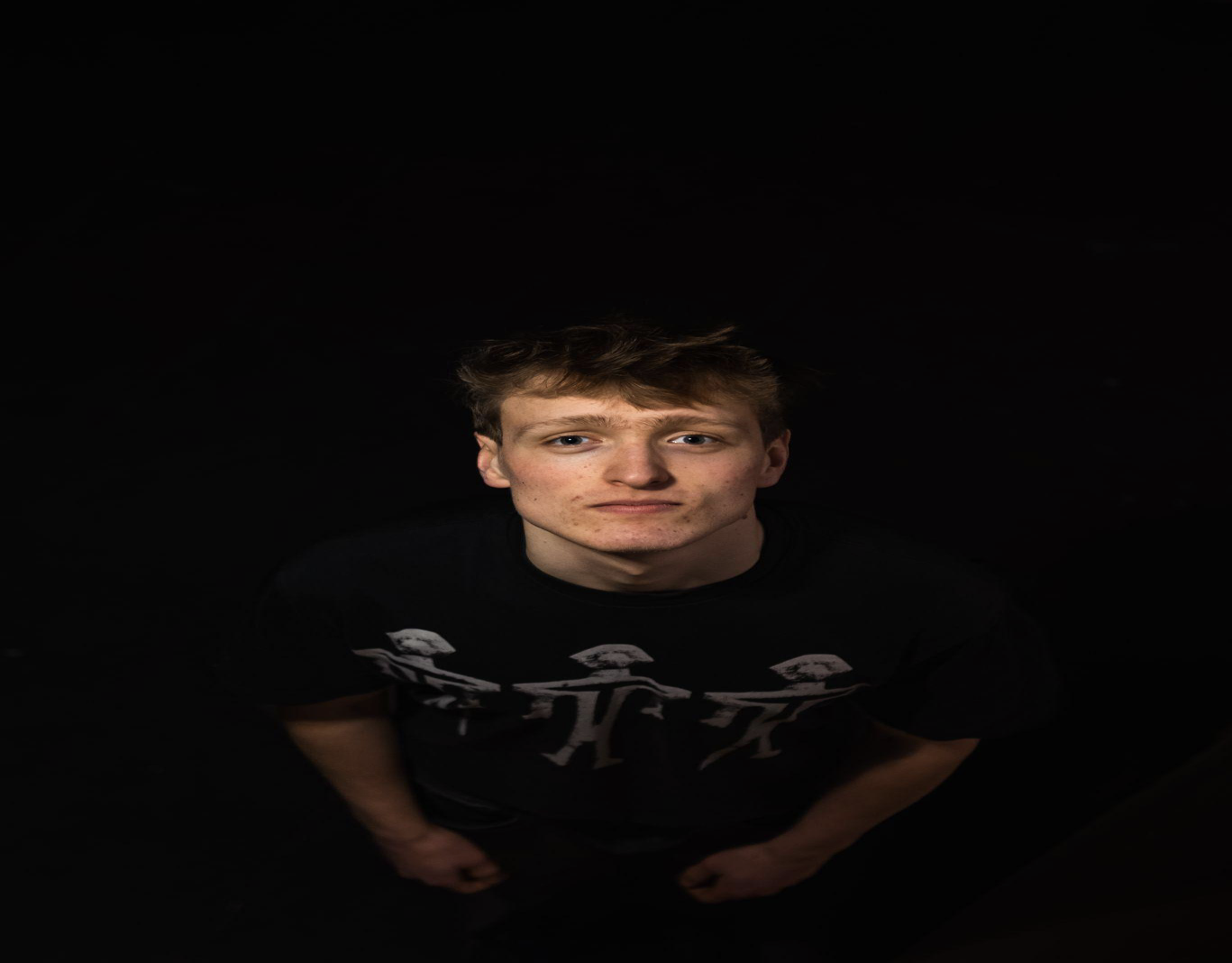
Stan van Dijk’s Em Four EP was released on July 21, 2023. It starts off sounding like the jazz music they play when the main character in a movie is walking down a dimly lit back city alley. The protagonist is slowly chased into the second song, “Cariab’s Theme.” The listener is offered hope he can escape his enemies. As a fast pace drum comes in, maybe the hero has gotten away. Maybe he has found a new challenge. Possibly a paradise. At least that’s what I imagine when I hear the music. Stan’s music has a curious uniformity
It is not surprising when Dutch and American arts shine together, considering their use of a personalized uniqueness and their embrace of different stylistic approaches. They both share a culture of individualism, achieving a dream of the impossible, which is not a bad thing especially in the over-saturated art markets of the new digital age. Songs that are not original sounding are quickly labeled as bland. In order to get to the root of this, I reached out to Stan to provide me some insights in a one-to-one conversation.

Isaac: What got you started with the arts and music?
Stan: Not that long alone, back then I was still in high school in 2016 to 2017, a guy I hung out with a lot started making music. This was around the time Trap Music was really big. Especially Dutch Trap and Dutch Hip Hop. The trap explosion in America from 2012 to 2013 was everywhere in the Netherlands by 2016. This guy I was hanging out with said there was a program you could download on your laptop and start making music. It was a big cultural change for music in the Netherlands. Everybody was listening to hip hop. Before it was mainly just EDM and house. We would send Youtube tutorials back and forth to each other and that’s where it started.
I: What was the software you started making beats on?
S: It was a really crappy program called LMMS, I don’t know if you’re familiar. It’s open source music software. It’s basically a regular DAW (digital audio workstation). It was made for Windows XP. It looks really old. We used it for about a month. Then, we found a free trial for FL Studios and I have been using it ever since.
I: Does the American Trap music work its way into your jazz creations?
S: Back when I started, I was listening to a lot of hip hop, ultimately shifting from Dutch to American hip hop. It slowly became more Boom Bap. A lot of the East Coast and the Midwest. A lot of Madlib & J Dilla. From there the samples were really cool. I really like Freddie Gibbs. At times, he doesn’t have drums in the background. Just a looped sample. I wanted to learn more about sampling. One of the first samples I ever found was Bill Evans’ “B Minor Waltz” on the album You Must Believe in Spring. It was sampled on a soundcloud song. I realized you could take old music and loop it and there is your beat. But also an eye opener that all the music you hear has an origin it takes inspiration from. With Bill Evans, the whole jazz rabbit hole opened and I fell down it.
I: It’s almost like you could sample any part of a Bill Evan’s lick and it would be a useful sample. Do you write your own chord progressions with this in mind?
S: I think writing my own chord progressions is a weak point of mine. When I sit behind a piano, I do not think ‘oh I will play in this key.’ I learn a lot of songs from listening to old samples like Bill Evan’s. When I first started, I thought the piano was a limited tool but with the computer you can get any sound. I’m not actively thinking about what I should be practicing. I really gotta step up my piano game (laughter).
I: It sounds good to me (laughter). I found your instagram page after mumble jazz artist Unc D from my hometown sent me your profile after you two did a collaboration together. How did this collaboration come about?
S: The internet, man. I saw him on Instagram. When he first started calling the genre “Mumble Jazz.” It’s a funny term but it serves a function. It really is Mumble Jazz. It sounds like a meme at first. He’s really good with his memes too (laughter). I dm’d him and was like I don’t know what you’re doing but I like it. He responded back ‘Oh you like my music, let’s work together. You make music, I make music, now we make music.’
I: When talking to Unc D, he told me he deals with some angry criticisms online for Mumble Jazz. The current rise of the internet seems to have resulted in more criticism directly to artists, unlike previous media. What do you think about the openness of internet commentary and its impact on the arts?
S: Personally, I haven’t dealt with criticism yet where people outright say ‘this sucks.’ It’s like when a new artist releases something more experimental and everybody has different reactions to it. Some people are like ‘this is really shit’ and other people love it. It’s very hyperbolic. It can be a 6/10 or it’s complete shit. People on the internet talk as if they are talking with their friends. Suddenly the stuff you are talking about with your friends is on the internet. Even when you’re talking with friends, there is reading between the lines. Like when you say an album is shit, it doesn’t mean it is. It just means you don’t like it. There is also a casualness to talking with your friends. People approach the internet in this way. They don’t seem to realize that their words reach the artist. Individuals talk about the work artists make, oftentimes without considering that it takes a lot of hard effort. This effort is a lifestyle choice. It’s not an easy way to live for most people.
I: I often think back to artists like Daniel Johnston, known predominantly for his indie and lo-fi music. If they appeared today, I fear the internet critics could kill the confidence of experimental artists like him. However, with jazz, there is already a lot of criticism among listeners to deal with!
S: Yeah what I noticed is people seem to hate when you ‘put up a show’, especially when you seem to ‘fake it’. However, on the internet, you can create your own world and the creative world in which your music exists. I am a big Flying Lotus fan. I’m not sure if you know Jelee. I released an album on his label, Heliopolis Recordings. He put me onto a lot of stuff like Flying Lotus. It’s like their music has its own space and world. You cannot force funk in that sense.
I: When you release music, it has a uniformity to it. When I hear your music on a random shuffle, I know it is Stan’s song even if I never heard it before. That’s a good thing in my opinion. It’s unique to your own sound. What is your approach with this?
S: I really like the idea of releasing multiple albums which have a specific identity. For example, Tyler the Creator is a master of creating an album which has a very defined aesthetic and sense of identity. I really admire and look up to artists that can create music with a unique sense of identity. I hope to be there one day. For the singles I am releasing, they are all iterations of the same idea. There is a sound I’m working with and reiterations of the same idea. I could compile them all for an album since they all sit under the same flag. But it feels like a facade to create an album with a pre-set identity and intentions. But I want to be able to do this and have two years to make a full album. It should be more than audio. There needs to be visuals, clothing, it should be a complete project. Albums are cool, but I think more stuff should be done than just releasing an album. I experienced it after releasing an album. It’s a big event and tells everyone to look at Spotify, but after it’s released it’s silent. I prefer to keep a steady stream of music flowing.
I: It seems that there’s a shortage of full-album appreciation. I think people have shorter attention spans (laughter). It’s harder to connect with full album releases because consumers are not interested as they once were because the market has some saturation. For myself, it’s hard to listen to a full album if I do not purchase the vinyl record or CD.
S: It boils down to anticipation. I’m a big fan of James Zoo and if he released an album today, my anticipation would be sky high because the music is so cool. I like his art and him as an artist. But if it’s just an album coming by artists I don’t know, finding the time to listen and take it in — it’s time consuming! I think I could be more genuine if I was making an album but even taking a year to make an album. You reinvent yourself through the year. It’s a matter of keeping it fresh for yourself.
I: Changing directions a little bit. Why do you think the jazz scene is vibrant and growing in the Netherlands?
S: It’s weird for me to think of it as an outsider since I’ve lived here my whole life. So I can’t say much about the differences between the Netherlands and the U.S.. I think with Amsterdam, people are attracted to the stigma of it as a party capital with techno and house music. In reality, it’s a place for a lot of different cultures and music. I think people value live music a lot here. Was it a difference coming from America?
I: It was a big difference where I was located before moving to the Netherlands. In Northeast Ohio, the American Rust belt, the jazz scene is not as big. A lot of the local live music scene are tribute bands at dive bars. Not exactly my type. Even for hip hop artists it is difficult to find space and venues willing to do shows. I can’t speak much on Cleveland’s jazz scene but it’s way busier than Youngstown’s because they have more venues. Big American cities like New York will probably always have a vibrant jazz scene. What I loved about the Netherland’s jazz scene is that you have options. You can go see a big name at the Bimhuis or you can see a great set for a low cover fee at Cafe Alto. In those spaces you are truly interacting with music history in a way. I was looking forward to it before moving here.
S: It’s a small country. If you live in Utrecht and you want to check out jazz it’s just a 20 minute train and you’re in the Amsterdam center. It’s very accessible in that sense.
I: What are your favorite jazz venues in the Netherlands?
S: You have to give it to Paradiso for the ambience. It’s really pretty with the colored glass panes on the background. Another favourite is the Bimhuis. I love their programming. They really know what’s going on and are actively looking out for what’s happening in not just Amsterdam, but all around Europe. Melkweg’s small stage is amazing for hip-hop due to its ambience. It feels like a hip hop venue. Small, crowded, sweaty, and the people really get down.
In my next blog, I will be writing on Platypus Records on Zeedijk in De Wallen and how the owners use ‘hip hop architecture’ as a successful business model that attracts a strong sense of community.
About the author

Isaac Carrino (26) graduated from the University of Amsterdam in 2021 with a masters in American Studies. Isaac is originally from Youngstown, Ohio and earned his undergraduate degree in history from Youngstown State University. He currently operates a music production business in Amsterdam and enjoys playing basketball in his free time. He is also a Young Minds Ambassador at the John Adams Institute.
For more information about the Young Adams Institute, check out https://www.john-adams.nl/.


