Author: Dario Graziano

  • Jennifer Doudna: A journey of scientific breakthroughs, genes editing and a Nobel Prize

    You, like most people, might never have heard about Clustered Regularly Interspaced Short Palindromic Repeats gene editing, or CRISPR gene editing for short. This is a recently discovered gene editing technique (a methodology that allows to modify the genetic information of an organism) in the field of molecular biology that earned Jennifer Doudna and Emmanuelle Charpentier the Nobel Prize in Chemistry in 2020. It is only the sixth and seventh Nobel Prize to be awarded to women in the field of chemistry, the first shared by two women, and it recognizes Doudna and Charpentier’s long and fruitful career in science.

    Born in Washington D.C in 1964, but raised in Hawaii, Jennifer Doudna’s life is one defined by breakthrough achievements in science, education and activism. In a recent biography on Doudna by Walter Isaacson – known for the biographies of Elon Musk or Steve Jobs – she narrated what it was like to grow up on an island and attend a school where she was the only blond, blue-eyed kid. Surrounded by nature, her interest in biology first and in genetics later became an obvious choice for her educational background. Thankfully, her choice was very much encouraged by her parents, both with careers in teaching. Doudna first truly realized she could “do science” in 1985, during college practices, when she was mentioned in a scientific paper about bacteria after successfully growing the organisms.

    Encouraged again by her parents, she applied and got accepted into Harvard that same year. It was there, working in the laboratories of different distinguished professors in the field, that she discovered her passion for DNA first and RNA later. After finishing her dissertation, she asked Polish biologist and a later Nobel Prize laureate Jack Szostak to do her doctoral research under his supervision. Investigating RNA at a time where major discoveries in DNA were still being made was risky, especially for Doudna who was only just starting her career in science. “Never do something that a thousand other people are doing”, a guiding principle for Szostak, convinced Doudna of embarking into the scientific journey of RNA research.
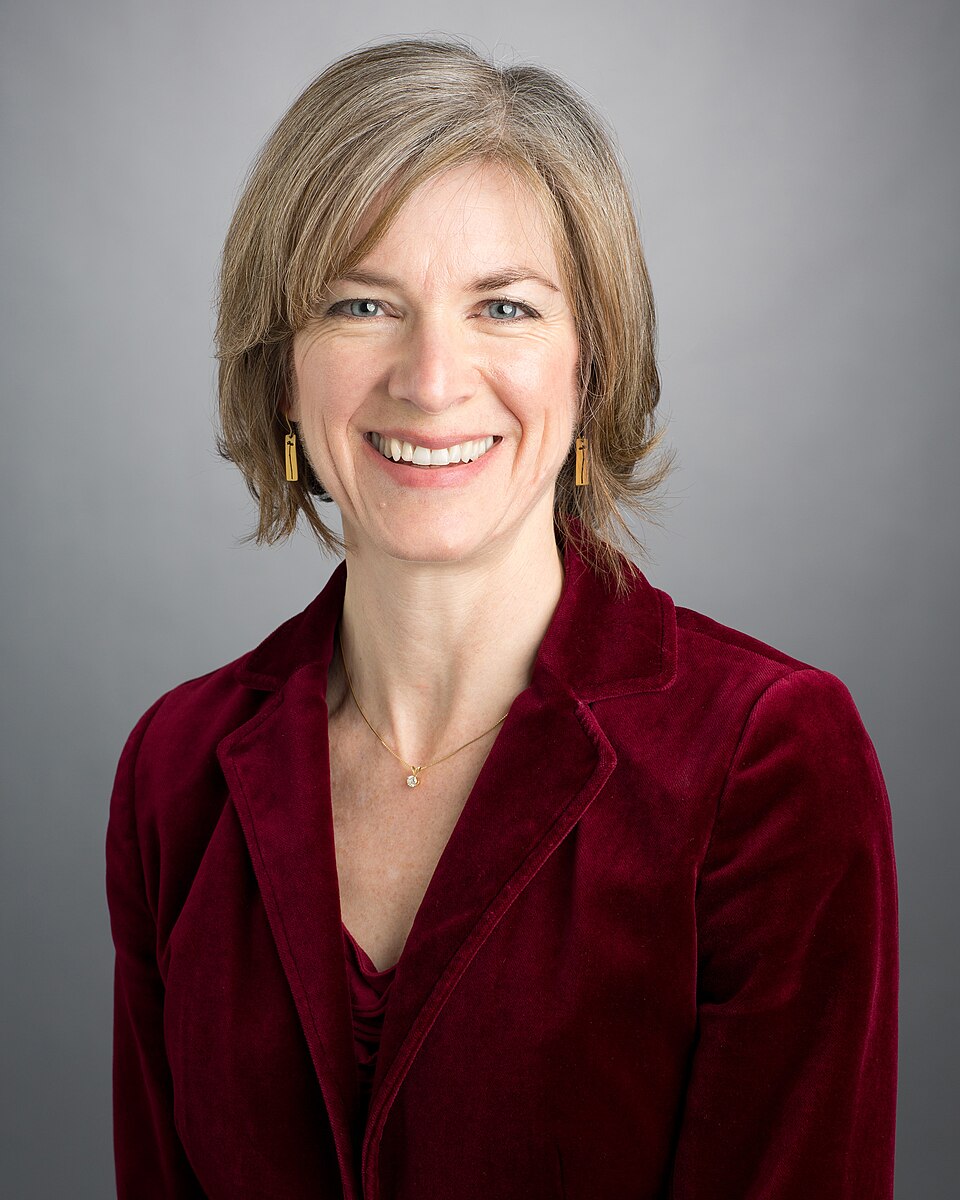
     A portrait of Jennifer Doudna in 2013

    During her PhD, she published various important and novel articles in prestigious scientific magazines. It made sense, then, to continue her research and after obtaining her PhD, Doudna started her postdoctoral research in Tomas Cech’s lab, then recently laureated with the Nobel Prize. Despite moving from the University of Colorado to Yale, she kept investigating the RNA molecular structure until Doudna and Cech were finally able to determine the location of every atom in an RNA molecule. This discovery, essential for the Nobel Prize she would end up winning later, began a “quest to translate basic science about RNA into a tool that could edit genes”, Isaacson explained in Doudna’s biography.

    Now a leading figure in a newly established field, Doudna continued to work at Yale until 2002. Afterwards, she felt it was time for a change and moved to Berkeley to both continue her research on RNA as well as teach classes, as this way she could contribute to public higher education in the U.S. It was during the early 2000s when Doudna became interested in the recently discovered CRISPR mechanism and in the genetic editing technique associated to CRISPR that she would contribute to discover.

    Explained in layman terms,CRISPR gene editing is a tool used by scientists to, as redundant as it sounds, edit genes and consequently change them. Think of genes as the instruction manuals for all living things. They sometimes present problems that could result in diseases or other genetic related issues. CRISPR is then the figurate scissors that make it possible to cut those specific parts out of the manual and add new instructions that fix the mistakes. Think of it like editing a document on a computer. CRISPR allows scientists to make changes to the genetic code of living things, like correcting spelling mistakes or adding new sentences to improve the document. But the implications and possibilities of CRISPR gene editing go beyond correcting spelling mistakes in a Word document.

    In 2008 Doudna began her entrepreneurial journey when she briefly started to work for Genentech, a biotechnology corporation. Her jump to the corporate world followed the conviction that it was there where she would be able to investigate concrete CRISPR techniques to actually help people suffering from illnesses and genetic diseases. After working for Genentech, an experience she did not particularly enjoy, she moved back to academia. Since then, Doudna has founded over 4 companies and she is now on the advisory board of different businesses and foundations mainly focused in CRISPR therapeutic gene editing applications. Although she “didn’t have the right skill set or passions to work at a big company”, creating her own companies and advising others became the way to maintain a healthy relationship between corporatism, activism, research and academia.

    In 2011, while attending a conference in Puerto Rico, Doudna met Emmanuelle Charpentier. Charpentier, a French researcher in microbiology, genetics and biochemistry who had also been doing intensive investigations on CRISPR. Their match happened instantly, as Doudna recalls in her biography, and soon after the conference they started working together. A research journey of sweat and tears would, in 2020, be recognized by the Nobel Prize in Chemistry awarded to both women. Their discovery was also part of a race amongst different scientific teams around the world trying to prove that CRISPR techniques could be used for genetic editing in humans. Throughout her life, and prior to the Nobel Prize in Chemistry, Doudna received prestigious recognitions such as, among others, the Princesa de Asturias award in 2015 or the Tang and Kavli prizes in 2016 and 2018, respectively.

    The discovery, which was made by different scientific teams almost simultaneously, had broader implications. The possibility of editing the human genome had now become a probability and one with many ethical issues behind. Although a big part of the scientific community, amongst them Doudna, are speaking out in favor of a moratorium on the use of this technique, scientific teams around the world have already begun to use it experimentally on humans. In a future where “free-market eugenics” will be possible, we need scientists like Doudna, who in the vanguard of discovery maintain responsibility over the dangers of the field and recognize the importance of policies regulating it. Other uses of CRISPR, generally more accepted and that are being researched, also by Doudna and her companies, include enhancing crops in agriculture or diagnosing genetic disorders in humans which could eventually help to make us less vulnerable to Alzheimer, cancer or future pandemics.

    DAVOS/SWITZERLAND, 23JAN16 – Klaus Schwab (L), Founder and Executive Chairman, World Economic Forum and Jennifer Doudna (R), Professor of Chemistry and of Molecular and Cell Biology, University of California, Berkeley, US, discuss on stage at the Annual Meeting 2016 of the World Economic Forum in Davos, Switzerland, January 23, 2016. WORLD ECONOMIC FORUM/swiss-image.ch/Photo Remy Steinegger

    When COVID-19 kept the world secluded, Doudna worked with an international team to find ways in which CRISPR and RNA editing could be useful for detecting and then curing the disease. Their investigation ran parallel to hundreds of teams around the world until in 2020 the first two RNA vaccines, a recognition of the hard work of the global scientific community, were approved by the U.S. and other governments. Shortly after Doudna and Charpentier were awarded the Nobel Prize for CRISPR editing.

    Doudna is now the Li Ka Shing Chancellor’s Chair Professor at the University of California, Berkley and carries on her research for the Howard Hughes Medical Institute. She continues to work in her companies, such as Mammoth Biosciences and advises some big pharmaceuticals such as Johnson & Johnson. She also keeps calling for funding on scientific research and leads the Doudna Lab, a groundbreaking institution in CRISPR gene editing and its applications.


    About the Author

    Dario is a student in American Studies at the University of Amsterdam. He has previously completed a bachelor in History at the University of Zaragoza and bachelor in Communication at the Universitat Oberta de Catalunya. During his bachelor years, he also had the chance to study abroad in countries such as the U.S., Italy or Romania, which have made him specially interested in transnational movements and perspectives. He is currently writing a dissertation on the unpublished autobiography of Vaughn Love, one of the African Americans who fought in the Abraham Lincoln Brigade during the Spanish Civil War. In his free time, Dario is also a member of the Young Minds Network of the John Adams Institute in Amsterdam.

    For more information about the Young Adams Institute, check out https://www.john-adams.nl/.
  • Quannah Chasinghorse, a Native American walking between the worlds of fashion and activism

    Growing up, Quannah Chasinghorse, a Native American from Hän Gwich’in and Oglala Lakota descent was discouraged to become a model by the lack of her people’s representation in the fashion industry. But in 2021, at the age of 19, she would make the headlines for walking the MET Gala with a Native American outfit and for showing her distinctive traditional face tattoos. A documentary released in September of last year and titled Walking Two Worlds shows that, besides being a model, Chasinghorse also has an extensive record on Native American rights and climate change activism.

    Chasinghorse was born in 2002 in the Navajo Nation of Arizona. Her mother Jody, also a Native American and climate change activist, is Hän Gwich’in, a First Nation with an estimated population of 310 and located in Alaska and the Yukon territory in Canada. Her father is Oglala Lakota, a Native American people living in North and South Dakota with an estimated population of about 115,000. Raised by her mother and two older brothers, she spent her early childhood between Mongolia, Arizona and New Mexico. At age 6 she moved to Alaska, her maternal homeland, where she was raised in the traditional customs of the Hän Gwich’in. As just a kid she remembers fishing, hunting, chopping wood and being transported by a dog team. After Chasinghorse’s mother got a promotion at her job they all moved to Fairbanks, back in Arizona, where she would spend her teen years. 

    In the city, Chasinghorse became involved in protests against the drilling of the Arctic National Wildlife Refuge, a project approved by president Donald Trump that threatened to drill millions of acres in Alaska. Drawing the connection between Native American Rights and environmental activism came naturally, and shortly after the protests she also served in a Native American local council educating on the ways of life and defending the original land of the Hän Gwich’in. Whilst speaking at climate rallies, she also started working with the Alaska Wilderness League, the lead organization fighting to protect the Arctic Refuge. In a press commentary reminiscing on the reasons for her involvement in climate change activism, she explained: “Our way of life is at risk. Our culture, all of those things that make us who we are, that make our identity.” 

    Chasinghorse and her mother during a trip to Washington to met with different activists and U.S. representatives and discuss the implications of Native American land exploitations”

    Her career as a model started a few years later, in 2020, when she was approached by a casting agent, whilst she was participating in a get-out-the-vote activity – Native Americans have been suffering disenfranchisement for centuries and have one of the lowest voting turnouts in every election –. In her first modeling campaign for Calvin Klein she would appear showing her traditional face tattoos, called Yidįįłtoo, that are linked to a Hän Gwich’in rite of passage and important moments in life. Her appearance, defying the western fashion standards became highly popular and soon she signed her first contract with a big agency. Since then, she has been featured in many of the most important fashion magazines such as Vogue and has posed for brands like Chanel or Ralph Lauren.

    Amongst her most “iconic” moments are the 2021 MET Gala red carpet. Wearing a dress inspired by Native American style and jewelry from the Navajo Nation she made the headlines both for her unique appearance and for defying the theme, “In America: A Lexicon of Fashion” by wearing non-western fashion elements. Later Chasinghorse would admit on social media that “After a while of trying to fit in in a space where there is a huge lack of indigenous representation, I just started focusing on why I went in the first place”. The relationship of the fashion industry often clashes with climate change activism, Chasinghorse recognizes, but she is also aware that “you have to be at the table where they’re making these decisions”. She now uses her growing influence in social networks to amplify her activism and is often, almost daily, posting about different environmental, social and Native American causes.

    Quannah Chasinghorse at the 2021 MET Gala wearing a dress by Peter Dundas and the jewelry of the former Miss Navajo Nation Jocelyn Billy Upshaw

    Shortly after initiating her career as a model, Chasinghorse was contacted by Maia Wikler, a candidate in a political ecology PhD at the University of Victoria. Wikler, who knew Chasinghorse from her activism work in 2019, pitched her the idea of making a documentary about her career in activism. After a long pandemic with continuous filming pauses, the work Walking Two Worlds was released. The short piece, about half an hour long, features the life of Chasinghorse and aims to highlight her activism journey to engage more people in the Alaskan climate situation. 

    The title of the documentary is also a reference to a tension that Chasinghorse faces in her career and social activism. As one of the first Native American models to be featured by big fashion brands, the first with traditional face tattoos, she feels loneliness and loss of identity from her roots. She would be walking, figuratively, between an “indigenous way of life” and the “modern world”, as phrased by Chasinghorse’s mother in the documentary. After moving to Los Angeles to continue modeling, Chasinghorse felt anxiety attacks from being away from her homeland. In a poem featured in the documentary she expresses her feelings as a walker between two worlds:

    I’m from the beaded moose hide in modern 
    clothes, the smell of sage, the taste of fry bread.

    I’m from the trees, fireweed trails, 
    mushing, and nature walks.

    In the Birch tree I used to climb,
    those long-lost limbs I remember 
    as if they were my own.

    From the hunting, fishing and berry picking trips,
    the potlatches and the legends our elders tell.

    I am from the Hän Gwich’in, Lakota
    and Navajo family.

    Besides these tensions in Chasinghorse life, her career keeps going on swiftly. In the recent March 2024 Oscar’s Gala, she wore again a Native American inspired dress and traditional jewelry. At only 21, she defies western fashion whilst serving as an inspiration for many Indigenous people around the world. Quannah Chasinghorse, model and activist, is an example proving that walking two worlds is possible.  

    At the very recent Oscar’s Gala, Chasinghorse once again attended wearing a dress that honored Native American fashion and jewelry

    About the author

    Dario is a student in American Studies at the University of Amsterdam. He has previously completed a bachelor in History at the University of Zaragoza and bachelor in Communication at the Universitat Oberta de Catalunya. During his bachelor years, he also had the chance to study abroad in countries such as the U.S., Italy or Romania, which have made him specially interested in transnational movements and perspectives. He is currently writing a dissertation on the unpublished autobiography of Vaughn Love, one of the African Americans who fought in the Abraham Lincoln Brigade during the Spanish Civil War. In his free time, Dario is also a member of the Young Minds Network of the John Adams Institute in Amsterdam.

    For more information about the Young Adams Institute, check out https://www.john-adams.nl/.
  • The Story of Susanna M. Salter, the First Woman Mayor of the U.S.

    Very often, when telling the history of women’s suffrage, we focus only on the major achievements, telling the stories of the most recognizable activists such as Elizabeth Cady Stanton or Susan B. Anthony. Before the 19th Amendment was ratified by the U.S. Congress and Senate in 1920, women had been fighting for over 150 years to attain the right to vote. By telling the story of lesser-known women who also fought and rallied for the rights to vote, we contribute to an unequivocally more inclusive timeline of general suffrage history.

    It was 1789 when the state of New Jersey became the first to allow any person with property, regardless of sex and race, to vote. The progressive decision would only last for eight years, but it set the beginning of a long century of reforms and activism, the perfection of democracy and the first steps towards the recognition of men and women as equals. The protagonist of today’s article was born on March of 164 years ago in Lamira, a small community in Ohio. Her name was Susanna M. Salter and I encourage everyone to read along to discover how she became the first woman mayor in the history of the United States. 

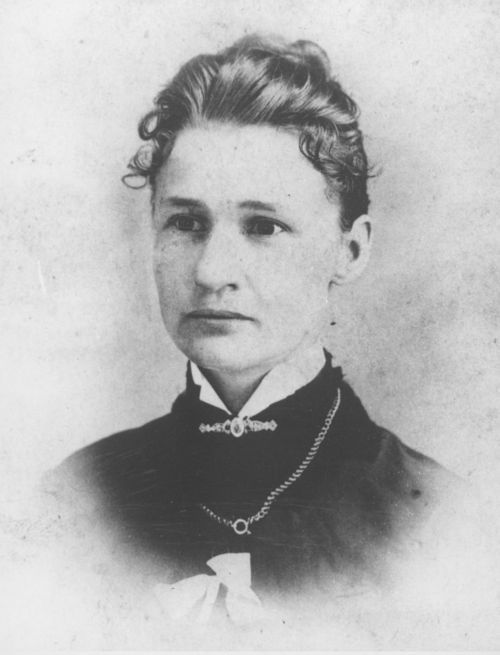
    A picture of Susanna M. Salter taken around the same year that she was elected as mayor of Argonia.

    Daughter of Quaker parents, she was the descendant of the first English settlers that arrived to the United States with William Penn. After living her youth in Silver Lake and whilst in school, she married Lewis Allison Salter and together with her parents they moved to a little farm in what would, in 1881, become the small city of Argonia in Kansas. Shortly after her marriage, Salter became involved with the recently founded Woman’s Christian Temperance Union (WCTU). An important player in the Temperance Movement against the consumption of alcohol that would eventually culminate with the 18th Amendment, the WTCU became already by 1890 the largest women’s organization in the world. 

    The rapid growth of the Union in the late 19th century translated into the involvement of the WTCU in other political issues such as those related to prostitution, labor and, most notably, suffrage. Under the direction of Frances Willard, the organization adopted the motto “Do Everything” and, as it got involved more into politics, its role in the eventual passing of the 19th Amendment also became bigger in parallel to other more recognized organizations such as the NWSA or the AWSA.

    In 1887, Kansas — that some years before had been the first state to hold a referendum on women’s suffrage — became also one of the first states to grant women the vote in municipal elections. That same year, Argonia, having been established as a municipality in 1885 and with a population of about 500 people, held its second municipal elections and the first in which women could vote. The previous term had elected Salter’s father as the mayor and her husband as the clerk, which, added to the fact that she was a member of the WTCU made her a quite popular character in the small city of Argonia. 

    Just as it happens every time that progress is made, the news of a woman’s enfranchisement in the upcoming municipal election was met with opposition amongst many men in Argonia. On top of that, the WTCU chapter in the city announced that it would support any candidate who made alcohol and tobacco prohibition a top priority in their political program. A group of men who believed that politics should be reserved for their sex decided to play a trick on the WTCU slate of candidates. As chance had it, the only eligible woman of the WTCU Argonia’s chapter was Salter; the men partaking in the complot copied the slate of the organization but changed the name of the mayor candidate to her first name, Susanna. Thinking that no men would vote a woman as mayor, without the knowledge or consent of Susanna, they printed the ballots and hoped that their little trick would undermine the prestige of the WTCU and demonstrate that women should not play any role in politics. 

    The morning of the election, Salter was contacted by the Republican party once one of its members noticed her name on the ballot. Asked if she would serve if elected, Salter responded affirmatively and after a quick meeting with the representatives of the party received their official support. Together with the support of the Prohibition Party, politically aligned with the WTCU, she ended up receiving two thirds of the total votes. What started as a trick from a group of angry men had ended with the election of Salter, 27 years old at the time, as the first ever woman mayor in the history of the United States. 

    Her election caused a sensation among the newspapers of the whole nation, and during her year as mayor she was visited by many correspondents from other states, making the little city of Argonia into a temporary tourist hot-spot. Even though her term as mayor lasted only for one year, the news of her election crossed borders as she received letters of congratulation from countries such as France, Germany or Italy. 

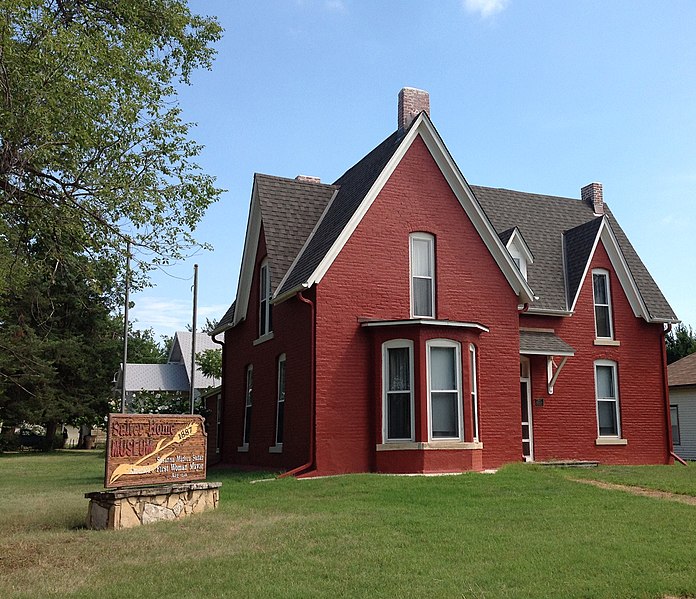
    The house of Susanna M. Salter in Argonia, today turned into a museum and part of the National Register of Historic Places.

    One of these letters, from Willard, the president of the WTCU, encouraged Salter to write “a note that I can read to audiences, showing the good of woman’s ballot as a temperance weapon and the advantage of women in office”. The following years allowed her to become a speaker in women’s suffrage conventions sharing, at least once, the stage with Susan B. Anthony. 

    Shortly after Salter’s term in office and choosing not to continue a career in politics, the whole family moved to Oklahoma and eventually settled, after her husband’s death in 1915, in Norman, a bigger city where her children could attend university. Little is known about her later years and, although she remained interested in politics for her whole life, she never sought to be re-elected or took any relevant political roles after her one-year mayor term. 

    Susanna M. Salter died in 1961, at age 101, in Norman, Oklahoma, although she was buried in the still today little city of Argonia, the place that made her the first ever woman to be elected as mayor in the United States. 

    Sources


    About the author

    Dario is a student in American Studies at the University of Amsterdam. He has previously completed a bachelor in History at the University of Zaragoza and bachelor in Communication at the Universitat Oberta de Catalunya. During his bachelor years, he also had the chance to study abroad in countries such as the U.S., Italy or Romania, which have made him specially interested in transnational movements and perspectives. He is currently writing a dissertation on the unpublished autobiography of Vaughn Love, one of the African Americans who fought in the Abraham Lincoln Brigade during the Spanish Civil War. In his free time, Dario is also a member of the Young Minds Network of the John Adams Institute in Amsterdam.

    For more information about the Young Adams Institute, check out https://www.john-adams.nl/.
  • Salaria Kea, an African American nurse in the Spanish Civil War

    Salaria Kea, born July 13th 1913 in Georgia, the “Empire State of the South”, is the first woman in this series of short articles dedicated to Women’s History Month. Instead of writing about some of history’s better known characters, we have decided to focus on those great American women who forever changed history and whose memories we ought to do justice to, but who have often been forgotten or silenced.  

    Salaria Kea has a Wikipedia page, and is the subject of a couple of book chapters and a few scattered journal articles, but if we mention her name, even among historians, no one seems to know who she is. A nurse by profession, Salaria Kea was to become the only African American woman to fight fascism in the Spanish Civil War of 1936. But she was more than just a nurse: her life is a journey of activism, participating in the early path towards the Civil Rights Era, whilst also rallying for international causes such as opposing the Italian invasion of Ethiopia in 1935.

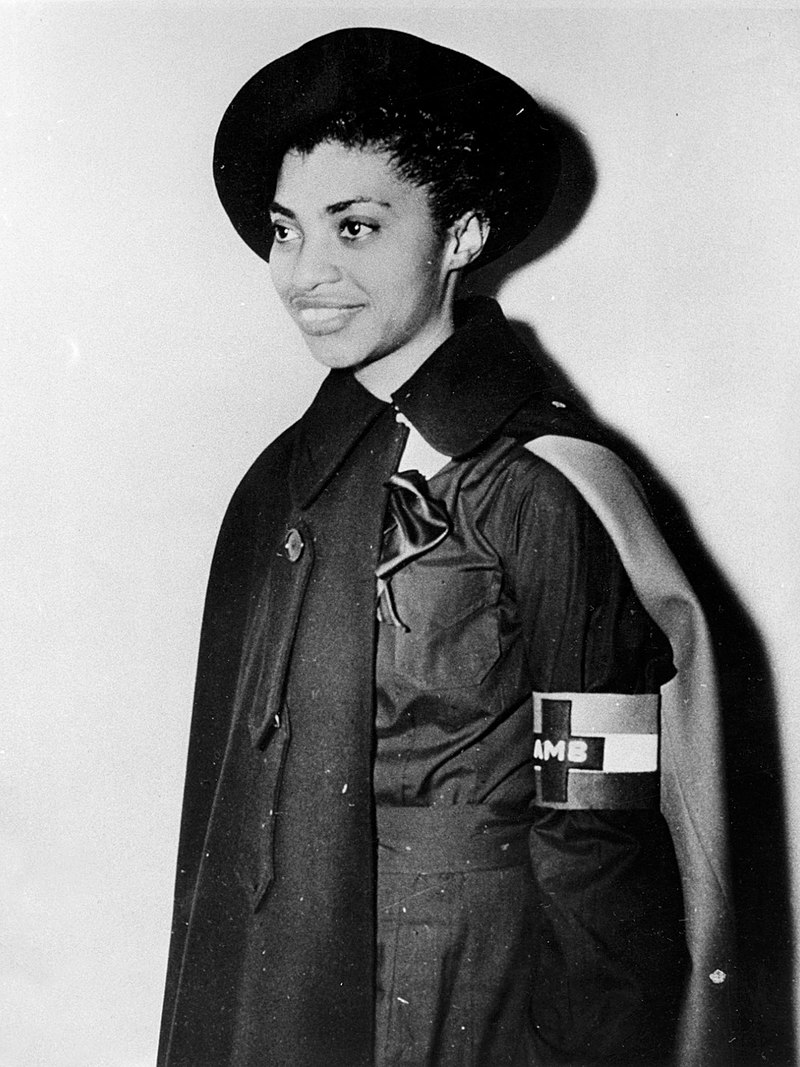
    A picture of Salaria Kea taken sometime during the Spanish Civil War, on it we see her wearing the military medics uniform of the International Brigades.

    Born in the deeply segregated American South, Kea faced challenges and adversity from an early age. After the death of her father, stabbed whilst he was working at a Sanitarium, her mother had to leave 6-month-old Salaria and her 3 older brothers in the care of family friends to be able to work and raise her children. But after two years, her mother returned to Georgia to marry a farmer, and Kea remembers that her brothers had to take care of her while her mother was away. It was her brothers who, working small jobs instead of going to school, ensured that at least the youngest sister could pursue an education. 

    It was during the last summers of high school, while working at a local doctor’s office, that Kea was introduced to her calling and future profession: medicine. But it was not that easy for her, and suffering from the harsh segregation laws of the South, she watched one school after the other deny her entry simply because of the color of her skin. Following the path to the North that many African Americans had to embark upon after the Great Depression, Salaria headed for New York. It was 1930 when she finally got accepted in the Harlem Hospital School of Nursing. 

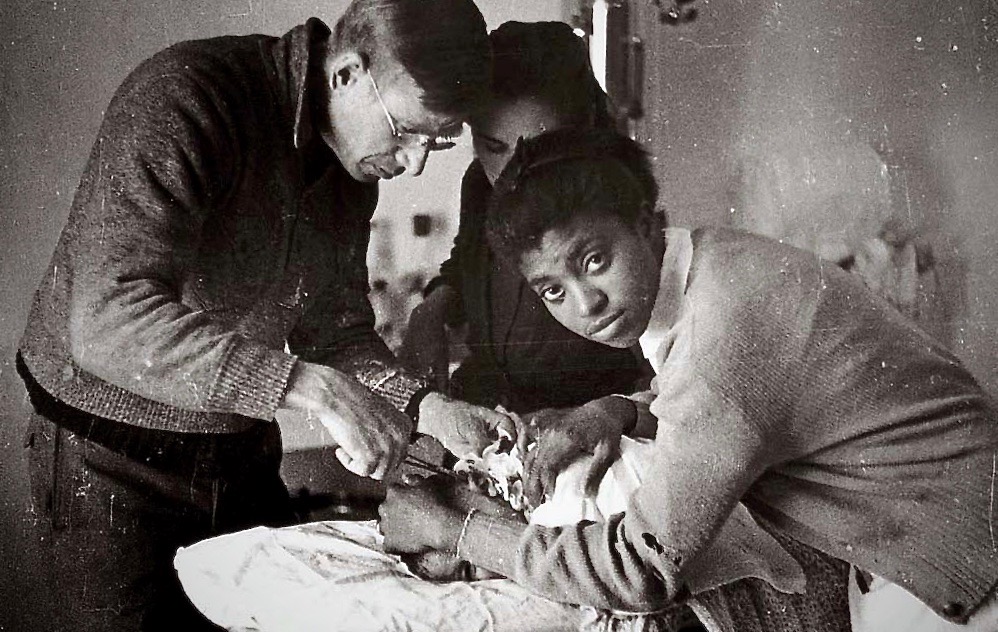
    Salaria Kea operates a soldier wounded during the Spanish Civil War.

    Almost 30 years before the now-famous Greensboro sit-ins, Kea and some of her schoolmates, protesting the racial segregation rules of the school, rejected to stand up from a “Whites Only” table at the dining room. Kea’s first experiences in organized protest eventually led to the school ending segregation in the dining areas. In 1934, she graduated and, shortly after, started to work in various hospitals where, meeting with the most progressive nurses, she increasingly became more politicized. 

    When in the Fall of 1935 the fascist troops of Mussolini invaded Ethiopia, Kea was ready to get into action to support what was hailed as the last free country in Africa. Together with other nurses, they raised enough money to send 75 beds to Ethiopia. When the troops of Mussolini, following Franco’s coup d’etat in 1936 entered the Spanish peninsula, Kea knew it was her call to volunteer to fight for the antifascist Spanish Republican side. 

    On March 27, 1937 Kea sailed for Spain aboard the Paris. Following the path of around 2,800 other American volunteers to fight in the Lincoln and Washington Brigades, she would be the only African American woman amongst them (in total around 85 African American men would also fight for the International Brigades). Assigned to a medical unit, Kea was responsible, during her first months in Spain, to turn the abandoned summer residence of king Alfonso XII into the Hospital Villa Paz. The old palace had been occupied by cattle, infested by mosquitos, and the plumbing and electricity were no longer working. 

    The front and end page of the 1938 pamphlet A Negro Nurse in Spain, which narrated the life of Salaria Kea and was used to raise money for the Spanish Civil War.

    Kea noticed that amongst the Republican women helping to fix the building into the hospital, most of them could not read, and so together with other international nurses, and in only six months, not only did they finish the project, but also taught everyone who worked there how to read and write. Soon the hospital, that never ceased to be operated in the harshest conditions, was filled with Ethiopians, Cubans, Americans, Italians, Germans and all the nationalities of the international brigades. 

    During the Aragon Campaign in early 1938, Kea was moved to the front to treat the patients that were in most urgent care and couldn’t be moved to the hospitals. In a pamphlet published shortly after her return to the U.S., she remembered how, in the midst of the battle, with planes of both sides flying above, “they battled just over our hospital unit. We could hear the stray bullets as they fell through the olive trees.” 

    During one of the fascist bombings, Kea lost the rest of her unit and had to hitchhike all the way back to Barcelona, where, in the last attempt to resist the fascist advance, the international troops had been stationed. But with the powerful German and Italian aviation supporting Franco’s army, it was only a matter of time before the International Brigades and the Republican troops would be forced to retreat. And so, sometime in March 1938, one of the bombings left Kea under 2 meters of rubble and, seriously injured, she was eventually sent back to the U.S. 

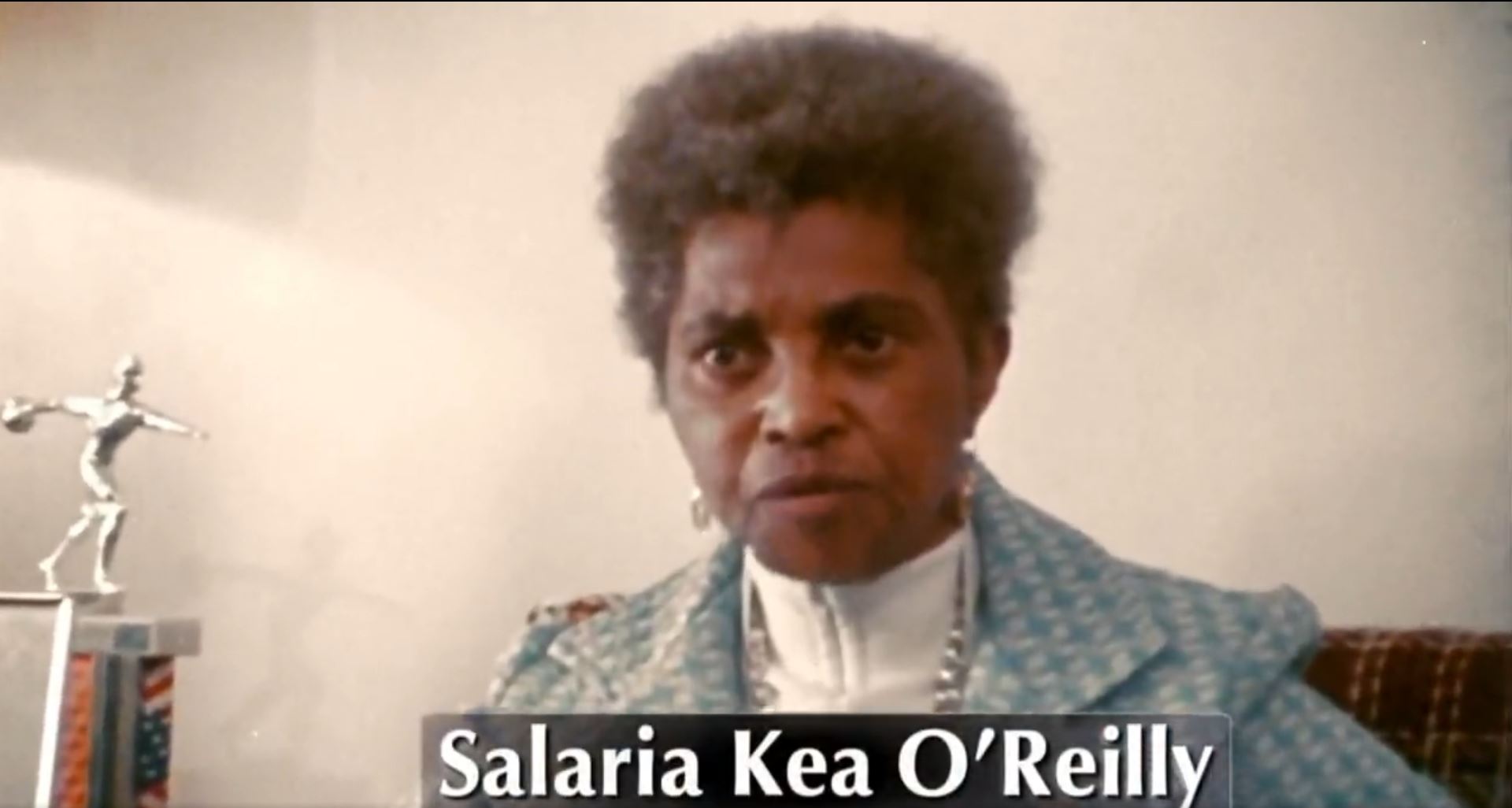
    Salaria Kea explains during an interview the reasons for which she decided to volunteer for the Spanish Civil War.

    Back in New York, she continued to organize convoys of medical supplies to be sent to Spain and, after the International Brigades where finally dismantled and survivors returned home, she was also active amongst the Veterans of the Abraham Lincoln Brigade (VALB for short, now Abraham Lincoln Brigade Archives, the organization behind the archive collections and whose activities keep the memory of all the American volunteers and their struggle against fascism in Spain alive). In a 1938 pamphlet narrating her story to raise funds for the still ongoing war, she ends with a note: “Surely Negro people will just as willingly give of their means to relieve the suffering of a people attacked by the enemy of all racial minorities, – fascism – and it’s most aggressive exponents – Italy and Germany.”

    After the civil war in Spain ended, Kea would also fight overseas as a nurse during WWII. Back home in Akron, Ohio, Kea and her husband, John O’Reilly – an Irish volunteer of the International Brigades that she met and married while they were in Spain – would live a peaceful life still working against fascism, “the enemies of the world”, as she would put it. On May 18th, 1990 Kea passed away in her home. 

    Hers was a life of struggle and activism, of constant opposition to the hardest realities of the world: discrimination and fascism. Her story is one of intersectionality, as a Black woman and a nurse in a war that was happening thousands of kilometers away from her home. Today, this month, but forever, we ought to remember and honor the life and legacy of Salaria Kea.

    Sources


    About the author

    Dario is a student in American Studies at the University of Amsterdam. He has previously completed a bachelor in History at the University of Zaragoza and bachelor in Communication at the Universitat Oberta de Catalunya. During his bachelor years, he also had the chance to study abroad in countries such as the U.S., Italy or Romania, which have made him specially interested in transnational movements and perspectives. He is currently writing a dissertation on the unpublished autobiography of Vaughn Love, one of the African Americans who fought in the Abraham Lincoln Brigade during the Spanish Civil War. In his free time, Dario is also a member of the Young Minds Network of the John Adams Institute in Amsterdam.

    For more information about the Young Adams Institute, check out https://www.john-adams.nl/.