Author: aidencorreia99

  • “The Ballot Won’t Save Us” (PART I)

    “I have never seen a president refuse to drop a bomb, but I have seen them turn school funds into boxes of guns, and that is how I know the ballot won’t save us. We must save us,” poet Hernan Ramos spoke his words with such depth that it evoked a sense of deeper understanding within me and the audience around me. There is truth to his message, an acknowledgement that for the general American there is very little power in politics – especially with the Electoral College being the way it is. Just a few minutes before, writer and educator Darius Simpson had poignantly pointed out that even after casting your ballot, there will not be much action that will actually take place. His exact words: “the reality is that, after [you cast that ballot or don’t cast that ballot], we are still going to be dying – so what will we do then?”. I look around me and see countless homeless individuals hiding from the blistering midday sun in the few trees casting down their shadows on Yerba Gardens, San Francisco. I see the rising cost of living directly reflected in the grocery prices from conglomerates like Walgreens and CVS to corner stores selling the bare essentials. I see traces of environmental decay in plastic bits, bops and bags littering the streets and the sparse presence of insects. 

    Lesser than Two Evils … Right?

    With the elections coming up (only three days now…), there is a mixed sense of urgency and passivity that most Americans, and predominantly liberal Americans, seem to struggle with. As a non-American regarding the upcoming presidential elections, there is a tendency to, although be aware that both sides have their major flaws, argue in favor of the lesser of two evils – a principle that I have heard being thrown around more and more these days. The argument frequently goes that truly anyone would be better than Donald Trump, a logic that extended even to Joe Biden when absolutely necessary. The switch from president Joe Biden to VP Kamala Harris has provided somewhat of a breath of fresh air and overall people seem generally more hopeful about a potential Democratic win – some even convinced that she simply has to win. At the Democratic National Convention, held in Chicago, Harris presented herself as the torch holder of democracy – in contrast to the tyrannic Donald Trump. And what is the U.S. if not a beacon of democracy? (Ahum).

    Despite indirectly knowing that a win for the Democratic party would be a vote for the status quo and all its institutional issues (like rampant homelessness, the rising cost of living, drug problems, overconsumption, environmental decay, increased gun unsafety, growing identity divides… just to name a few), a win for Trump would be a clear detriment to the already weakened existence of a U.S. democracy, its freedoms, the autonomy of truth, and individual safeties. When discussing a potential second Trump presidency, or even the fact that he is allowed to run in the first place, I frequently hear the exasperating moan along the lines of “he’s a convicted felon, for Christ sakes!”. There is a certain disconnect here and for most people it is all too obvious that the upcoming elections are anything but normal. In what other “developed democratic nation” is a man charged with the falsification of business records in connection to a hush money payment and with (indirectly) instigating the violent January 6 Capitol riots and with collaborating alongside allies to overturn Georgia’s 2020 election results (the list seems to go on and on… what did Trump not do?) allowed to run for presidency? Despite Harris’ fairly recent history of not getting much work done during her time as vice president and her iffy history as attorney general she surely must be better than Trump, right? 

    Why Vote At All?

    Especially her employment history on criminal justice reform stings among people, and I recently almost got into somewhat of an argument when discussing the upcoming elections with someone. I put up my detached-non-American hat and point blank asked who they would be voting for in less than a month from now – expecting to, although un-excitedly, hear them say Harris. They were young, politically engaged, non-white, and not drowning in billions of dollars – surely there is a better option here? Instead the answer was neither here nor there, along the lines of it very much not being my business and the U.S. being “their pot to piss in”. “I’m not voting for a cop,” they concluded (a self-proclaimed Communist and a LA-native with Mexican roots stumbled upon the same predicament a few days later). Besides, Kamala predominantly seems to run on a platform of “Not Being Trump”, which appeals to those already on the fence about Trump, but does very little to convince those lured in by his logic and reasoning. 

    Not long afterwards, I asked someone else what they thought about the upcoming elections. I was still reflecting on the response I had gotten before, something within me now more aware of the delicacy and carefulness necessary to breach the subject. He was a 50-something Bay area native, with Taiwanese descent. We got to talking because he had somehow found himself stranded and unable to book a hostel in his, admittedly, drunk state – and he was now waiting for someone to pick him up. He was an agreeable man, clad in business wear which made him stand out from the hostel folk surrounding him – his loafers a stark contrast to my worn down once-white Adidas shoes. He, too, refused to tell me head-on. “In California,” he explained, gesturing toward the empty street we were standing on, with a gentlemen’s club just a few feet behind us, and a strip club not much further, “it pretty much goes without saying who you would vote for, and so we don’t really discuss it”. He expanded his point by adding that California is a Democratic-run state, and there was very little chance that the state would flip over. I could see some logic in the argument – the necessity to vote in a stable state will not feel as hard-pressed as it does in places like Arizona where Biden flipped the state with just 10,457 votes. But is that truly a justification enough to remain silent on your stance and beliefs? And just how self-evident is it that California will stay Blue? When taking the bus between San Francisco to LA a few days later, I saw more Trump support signs than I had seen before, a testimony to changing times and beliefs even in historically democratic states. 

    Pro-Trump vs. Kamala-Neutral

    I have generally felt that most individuals with Democratic beliefs will not be as staunch in their support for Harris as some Republicans seem to be for Trump. Around Trump, his fans have constructed a cult of personality – whereas Kamala unfortunately has not retained that same commitment which she initially received during Brat Summer when young people organized around her appointment. There seems to be some shame, even, and some general uncertainty and political disconnect. Something that quite surprised me is that people who ultimately choose not to vote, vote third party, or vote against what they already know and what clearly does not seem to be working (as now seems to be the case with Democratic politics) do not reach this decision because they are politically disengaged or uneducated. Instead, I have had some of the deepest and most profound conversations about the core of American politics and society with people who fit somewhere on this spectrum. Especially the genocide in Gaza, predominantly funded by U.S. tax money, has laid bare the deep flaws of American politics. 

    There is an increased awareness that neither party and neither presidential candidate will actually genuinely improve or eradicate the institutional issues nestled in the U.S. Sure, there is a lesser of two evils here and for most people it is clear that Trump is not that, but there is also an unwillingness to compromise on the issues that people care about. And, with Trump, there seems to be a stubborn conviction that it will at least be different, whatever that means. With Harris, it might just be much of the same. To people who are on the fence about either side, there is a recognition that real change must come from somewhere else. Of course, voting can act as a tool in the struggle toward a better America, but it should never be seen as a solution. Where, then, can real change come from?

  • Do Talk to Strangers!

    One of the main take-aways from travelling is unlearning a lot of the things engrained into you. Some of mine were (and to an extent continue to be – don’t worry mum!): Don’t stray off on your own. Don’t talk to strangers. Never get into someone’s car. Don’t accept food from someone… The list of rules continue, and most come with a cautionary tale often resulting in one’s brutal murder. But what if, after exploring on your own you get to talking to a nice person, and they later offer to drive you somewhere? Or what if you’re out camping in the middle of nowhere without any mode of transportation and you need a ride back into town? Or what if some guy fishing for crabs on the deserted rocks in Jericho Beach, Vancouver rips open a pack of dried mangos and kindly offers you some? Or what if some guy sporting the biggest and raunchiest mustache pulls up exclaiming he has tons of puppies in his white van that you’ve just got to check out? These are all fair situations in which there is simply nothing to do but to throw up your hands in ultimate defensiveness, confirm that there is truly nobody keeping tabs on you, and jolt “YEAH!”.

    I am (partly) joking of course, but there is something to say about the value of strangers. There is a saying that goes “every stranger is a friend you haven’t met yet” – at least, I would assume that is a saying – and there is truth to that. This isn’t to suggest that every person out there is one you have to have in your life and there continue to be situations where walking away is the best option. Like, stepping into a white van because the owner attests to a bunchload of puppies cowering in the back, is probably one of those situations. Once, someone I had just met ten minutes ago asked whether I would like to join him in his schoolbus converted home across America. I must admit I gave the offer some thought, but the idea of being stuck in the middle of nowhere with an older guy whose previous travel companion was a goat was one even I couldn’t quite get myself over – besides, I had a plane to catch two weeks later. But overall, most people are pretty nifty. And kind. And caring. And giving. Americans, and people eventually relocating to the U.S., are so incredibly giving. The U.S. is generally quite lucky to attract the people that it does.

    I have found that there is a certain disconnect between the American representation abroad (especially presented by the tourist you meet in, say, Amsterdam), and the way they truly are. Before people get on me for being factually incorrect, I must add that I have predominently stuck to larger metropolitan areas which are considerably more liberal – or in the case of the current election cycle, undecided or simply unattached to either party. I have yet to venture deeper into Trump Land as large swaths of thinly population areas are generally known, but from Americans I have heard that even in for instance the South I will find that people are genuinely nice. Additionally, as much as I would like to believe that the people make a country, this is unfortunately not the case in the U.S. where the “common man” is hardly represented in politics, and it is instead big money making most of the decisions. The global views we hold on the United States as a country do not match the way people actually are.

    Over time, I have found that a high level of trust makes for a better experience. As a Dutch person who has grown up in the east of the country (my hometown has a sheer population size of 30 thousand – 30 times smaller than San Francisco, and about a 125 times smaller than Los Angeles) I have generally come to trust the people around me. When first visiting the U.S. I became so ultimately aware that this is very much not a thing here. Especially in the darkening hours of the day, there is an irrational part of your brain that sees in every stranger a rapist, a murderer, a drug courier, or some other plethora of chargeable crimes. What is especially weird is the realisation that people will think the same about you. When passing someone, there is sometimes such a tension in the air that it would truly cut as sharply as a blade (as the Dutch would say). I have had to physically stop myself from blurting out “I’m good people!” and instead force upon my poor passer-by suspended eye contact and a simple smile. Now that I think of it, perhaps that didn’t make matters any better.

    Overall, though, there are good things that come from trust. I think it is just important to set certain paramaters and expectations on what trust means to you – and how one can “earn” it. In Quebec, when making a trip out to their famous waterfall, I met this woman soaking up the rays of sun that warmy settled on her face. Once she noticed me keeping my distance so as not to disturb her from the moment of serenity she seemed to have created for herself, she invited me over to enjoy the view together. We quickly got to talking, a combination of broken English on her side and broken French on mine, and bonded over our shared love for the hills surrounding us to the plains that stretch along Canada. She owned a van and loved to travel on her own, something I could relate to. As we talked, I felt trust nestle its way between us and create a bond that hadn’t existed five minutes before. We exchanged numbers and she told me to reach out if I was in need of any recommendations or would like to hang out later.

    I held on with texting her for a whole day – the rational part in my brain warning me about everything that could possibly go wrong: a murder, a kidnap, a dissapearance. How well did I really know her after all? And how well did she know me? But ultimately I trusted my gut and excitedly reached out the next morning. She picked me up an hour later, accidentally driving by the first time around which made us both explode in a nervous giggle as I entered the car a few minutes later. We spent the day driving around an artisan island, getting our hands on whatever free tasters that came our way – three glasses of wine, a small sachet of homemade candy (in exchange, we had to watch an explanatory video on its creation), some freshly distilled liquor, and some other things that must have slipped my memory in the passage of time. We ended the night in fashion with some local beers I acquired and a long drag of Canada-grown weed. I met her son and her cat, and I saw with my own two eyes the van with which she had made her way through Canada (and back).

    I am incredibly fortunate to have had that experience, not only because it was a truly wonderful day (and one I absolutely needed at the time, as I had some trouble adjusting after a month in the U.S.), but because it has generally made me more trusting of the people I meet along the way. Many months later, I met the nicest man on a beach in San Francisco. He had just spent the past thirty minutes swimming in what to me seemed to be unbearably cold conditions (as he had done for the past 24 years, I later found out), when our paths crossed and we struck up conversation. We admired the bay in front of us, the seals popping up their slick heads every now and then, the snowy egret calmy working its way down the shoreline in search of fish and other small verterbrates, and the beautiful white American pelicans dipping their beak into the water mid-flight to scoop out pray. We discussed American politics, San Francisco, our previous jobs, our travels, the Netherlands, and more – easily shifting from one topic to the next. Over the span of our one hour conversation and the next day that we spent together exploring different museums, view points across the city and beautifully curated gardens and greenhouses, we both gained a new friend and learned of lives completely beyond ourselves. After all, all friends were strangers you once hadn’t met yet.

  • Connection is Power

    “Is that a 35mm lens?” The question only reached me after I had already made my way past him. Under most circumstances, spontaneous interactions such as these go ignored. Especially in large cities, people are generally in a rush, wear headphones blasting music (or, in the case of San Francisco, I assume informative podcasts about anything AI), or simply don’t feel like it. All of these circumstances are fair, by the way, and I have definitely been guilty of each of these in the past, and I’m sure I will continue to be in the future. Today, though, I wasn’t quite going anywhere anyway, and my only plan was to simply follow the city noises and feel its vibrations reverberate through my soles.

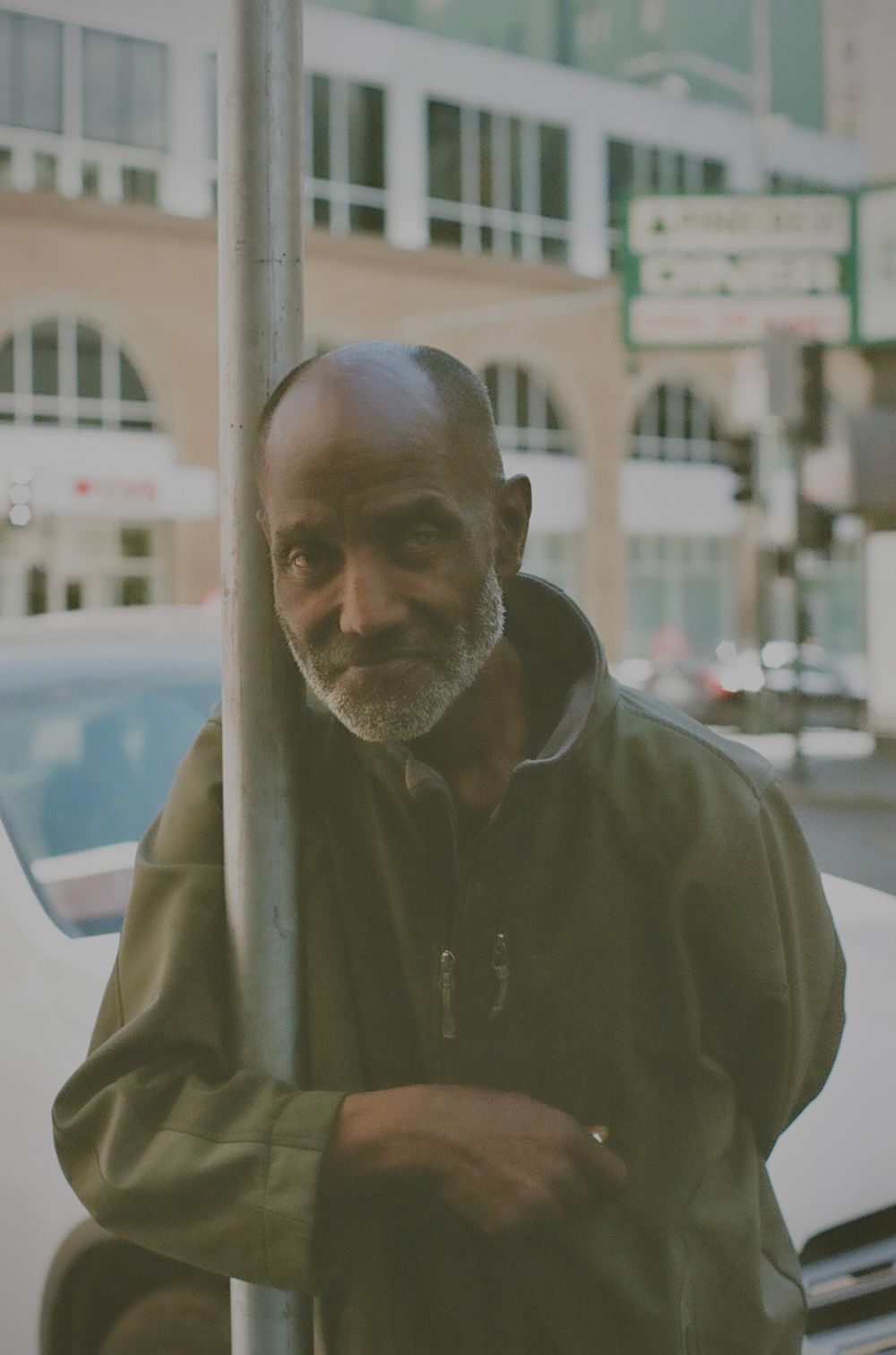
    I turn around and come face to face with a man who I later find out is named Ron. Within the next ten minutes, I learned more about Ron than I could learn of a fellow Dutch countryman in, give or take, five months. Americans tend to wear their hearts on their sleeves and you will often be pulled into the most unexpected stories. Speaking about this with my Egyptian friend, I have come to find that this is a general observation non-Americans tend to make about Americans. “You guys truly like to talk!” I proclaimed to a girl from San Clemente I met a couple of days later. She had to stop herself in her track and could do nothing but agree.

    Ron and I briefly talked about the camera which, although I am slowly considering it as my closest travel partner, I admittedly know very little about. He asked where I’m headed and when I’m from and we quickly found a few similarities to bond over. “I’ve been to the Netherlands!” he shared excitedly – I find Americans are more interested in countries beyond the U.S. than what we tend to give them credit for. I briefly talked about my plans to travel further south to make my way across the U.S. and glanced over my previous experience in the hot, so hot (so! hot!) city of Vegas, which is where he had some family currently residing. Once we reached the topic of Phoenix, he continued to tell me about a long-time high school friend of his named Eddie Murray who had had a phenomenal sports career and had landed his name in the Hall of Fame. What this had to do with Phoenix, I don’t quite recall or I simply never caught it. Around us, the chants of hotel workers striking for a better healthcare plan echoed through the air, and Ron had a tendency to take a few paces back every now and then to clear his throat so some of our dialogue unfortunately dissolved in the space between us.

    I did learn that Ron was originally from Maryland but relocated to California sometime during high school due to his parents taking on a different career path. During his own career, he had worked for a U.S. airline company which had taken him on assignments all across the world. I asked what his favourite destination had been, curious to hear more, but he simply couldn’t pick – and much more easily offered up his least favorite place. This had been Israel on account of people being rude and unwelcoming, despite them all having to work on the exact same thing. To an extent I could resonate with the sentiment, although I have been lucky enough to experience the opposite. Although the U.S. is far from a perfect place, the hospitality of (some of) its people make up for it.

    We quickly jumped from talking about nazi’s fleeing to north and south America post WWII (and was recommended to watch The Boys from Brazil) and dived into the state of current world affairs – a conversation that is perhaps not most suitable in front of a Jack in the Box one block off from Union Square. “It’s a horrible world and terrible days,” we concluded, solemnly and saddened. We wished each other the best of luck, and determined we were friends now. I ended up scurrying off deeper into SF and left him at the same lamppost where we’d initially started our conversation. I briefly spoke to him again three days later, to show him the photo I’d taken and offer a meal. He wasn’t doing too well, sleep and malaise set in his face, but he remembered me, “his friend from the Netherlands”. After I had picked up some iced water for him, I returned to find him awkwardly trying to catch a few seconds of shut eye with his newly acquired beanie drawn over his ears and his oversized sweater hugging his frail body. I put the water down, made sure not to disturb him and once again continued onwards. We often feel powerless in the face of inequality, and to an extent I think we are, but there is strength in connection. I am aware it is far from enough, but sometimes it is all we have.

    I never ended up asking how he had landed on the cruel streets of San Francisco, as it’s not my right to ask. I have slowly come to realise that knowledge is shared, never demanded. Especially not as an outsider, whose entire time here is a testament to privilege. And as much as Americans like to talk, there will always be things that remain private and theirs. Maybe they’re not so different from the Dutch after all.

  • “I’m posing for you!”

    While most Dutch people will often shy away from the invasive sight of a camera lens pointing toward them (it would be an infringement of our privacy after all), the exact same thing can ignite a very opposite response among Americans.

    On my first day back in San Francisco, I chose to meander along its hilly roads to restrengthen the few muscles I was left with after doing very little intensive hiking in the Netherlands. This would also be my very first time properly shooting film in a city setting – and in general, it was really pretty much my first time experimenting with street photography overall. Over time, I had grown much more comfortable taking shots of my loyal (and particularly patient!) golden retriever as she skipped her way through muddles and puddles alike, sat still atop tree trunks or diligently listened while I asked her to “sit and stay” at the most random of moments, or even more preferably I liked taking photos of non-moving models like flowers and plants. I had not quite dared to venture in the realm of human photography before, besides taking pictures of friends or family members of course. There is a certain awkwardness that needs breaking, and I personally believe there has to be some consent that I not yet had the guts to ask for.

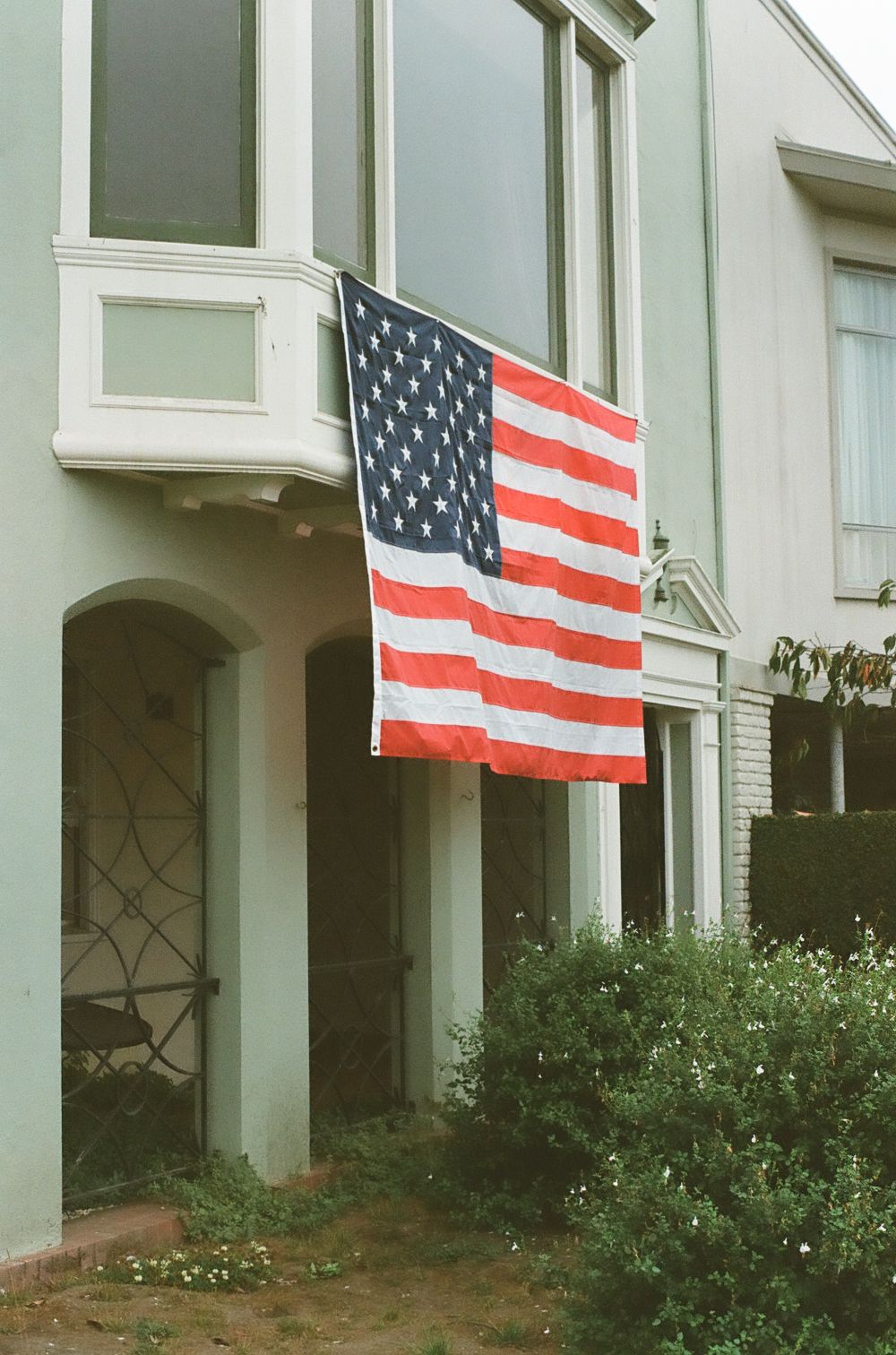
    Making my way along North Point from Fisherman’s Wharf to the Palace of Fine Arts, my newly-acquired yet trusty film camera dangled on my chest with each strutting step. I had a total of 36 shots to fill (realistically more like 30, knowing there would be bound to be more than one failed attempt), and I was keen to eventually capture more of a personal face to San Francisco besides just shots of its unique mix of architecture, old cars and oversized American flags. As I walked down a road of expensive mansions with over-the-top Halloween decorations (one sign read: “No trespassing: we’re tired of burying the bodies” with some blood plattered over and around the lettering), a man dressed in a blue overall one block away seemed to be staring right at me in complete stillness. From afar, a small part of my brain even entertained the thought that one of these houses had decided to decorate their front yards with a life size old-timey scarecrow. Once I came closer, I realised that was not the case (bummer, because if it had been, I for sure would have taken a photo!) and instead it was a middle aged man gently smiling right at me, the corners of his lips tucked upwards and pinching into his cheeks. I smiled back and nodded my head at him in acknowledgment and respect, still getting into the level of street niceties common in the U.S. (a few minutes prior to writing this, a man told me “God bless you” as we passed each other on a street corner down in Mission – people are truly kind here).

    “Ah, I was posing for you!” he jokingly called out as I had almost made my way past him – head instinctively lowered to reduce any form of further awkwardness. We briefly continued to quip back and forth, talking about how I would have felt too self-conscious to click away at him as much as I wanted to, while he instead instilled that I can (and should! He had recently seen the movie Civil War and felt in awe at the courageousness of the journalist on the front lines of the war) on the account of it being San Francisco where you can “do as you want”. By telling me this, in a tone so jovial that I couldn’t help but feel instantly relieved and comforted by his words, he helped me break down some of the highest bricks that constructed the barrier I had to climb in order to feel comfortable documenting street life. Just as I was about to ask whether I could perhaps take his photo – I could already imagine the way his kind face would reflect on film and was itching at the prospect – the garage door opened up behind him and it was time for him to get back to work. Uncertain whether to linger around and if anything, at least ask, I didn’t quite take long enough to linger on that thought and instead thanked him for his time, advice and confidence and continued on.

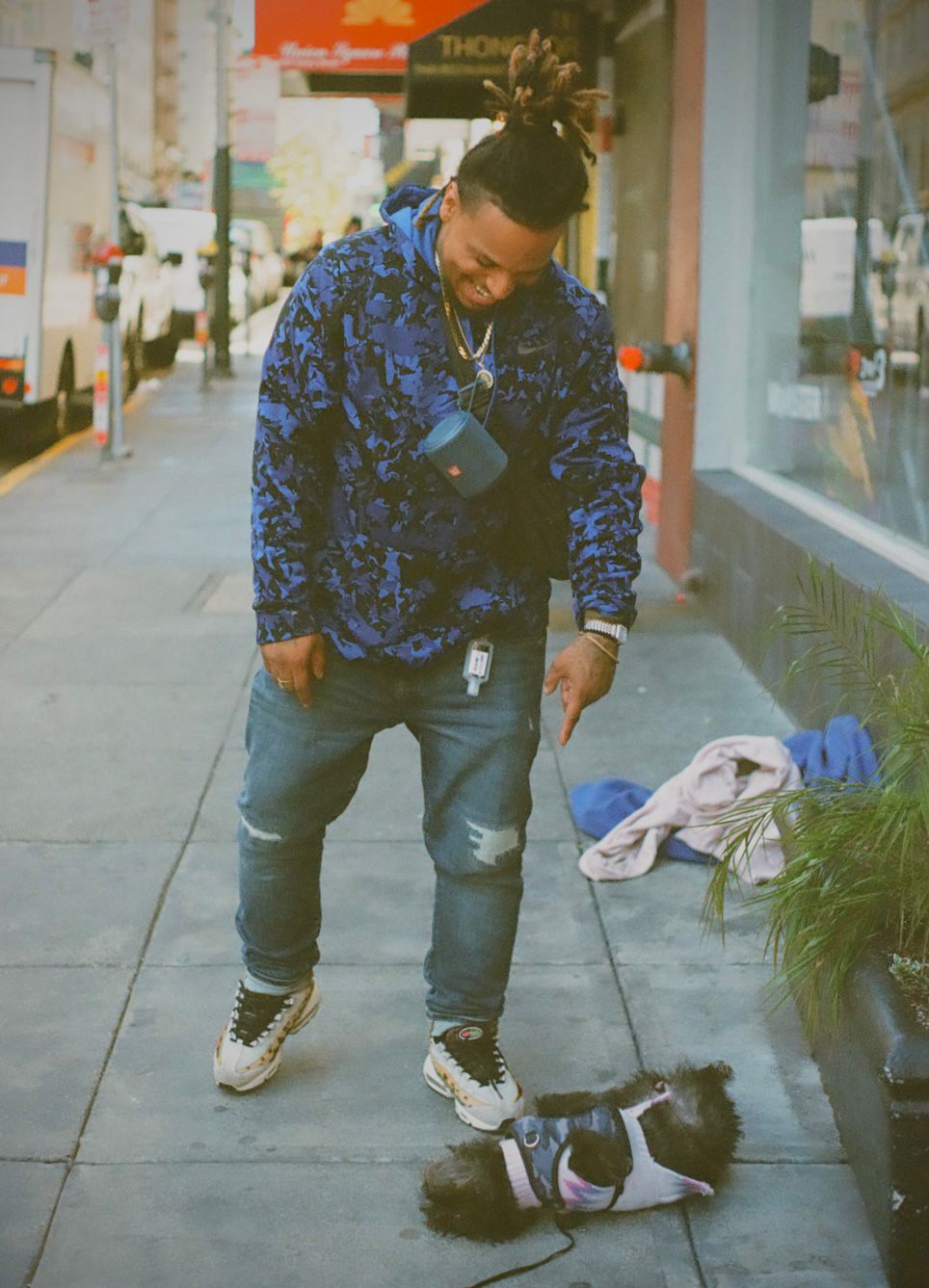
    For most of the day, I regretted not taking his photo. I replayed the conversation in my mind more than once and thought of all the conversational gaps during which I could have mustered up enough confidence. But ultimately, I had to accept that some things simply aren’t meant to be. Besides, a few days later, once I’d grown more accustomed to interacting with people on busy streets, someone else jokingly told me he was instinctively posing at the sight of my camera. I responded that I would love to take his photo, and I did. It isn’t the best thing I’ve shot, it isn’t even particularly good, as his face is out of focus and the light seems to fall flat. But what I saw looking at him through the little viewfinder on my camera was pure joy and playfulness. And confidence – the American amount, of course. I’m glad I got to capture that.

  • How to Stay Safe in NYC According to a Local: “Don’t Look Up!”

    It wasn’t until my last day in New York City that I was told how to stay safe in the most populated city in the United States. At that point, I had already spent five days in upper Manhattan, taking the metro up and down at all times of the day (and night) and continuing to walk around with my head held up high even after the sun had sunk behind the buildings shooting up towards the sky. Additionally, I had spent another five days in Brooklyn, where one of my main activities had been to smile at random strangers and accept interactions wherever they arose, be it with a random Russian man on the beach in Coney Island, or an Albanian employee at an immersive art installation. It was because of that final reason that I suddenly found myself entangled in a conversation – although it was more of a one-sided lecture from her part – about safety in New York City. 

    I had just spent a couple of days walking around for eight hours a day, feeling unable to keep up with the growing list of things I still wanted to experience and see. On my last day, I had decided to venture out somewhat earlier than usual and make my way from Crown Heights in Brooklyn up to 34th Street in Manhattan to attend the biggest St. Patrick’s Parade in the world. Due to me naturally doing no prior research (I never learn), my expectations exceeded what I ultimately encountered and I quickly found the endless noise of countless bagpipes to become repetitive. For some reason, I had expected the parade to resemble carnival as we celebrate it in the Netherlands and had counted on seeing colourful floats, boisterous Irishmen and Americans alike, and, of course, a lot of Guinness spilled from cups on pavements, shirts and shoes. Nothing was less true and instead I was met with American families lining up behind the barricades that closed off a very large portion of Fifth Avenue, all collectively watching, smiling and clapping along as multiple Irish Associations make their way uptown surrounded by music. Signs like “Kick out the English” received even more clapping. Overall, the general atmosphere seemed to be positive, with over 12.9% of New Yorkers identifying with the Irish flags and banners that proudly waved in the wind – despite having lived in the U.S. all of their lives. 

    I later found out that the drinking kicks off towards the evening and mostly takes place in Irish pubs and clubs – but for me the fun unfortunately tends to end once festivities such as these move away from the streets into the indoors and so I saw very little of this. After ten minutes of trying to integrate among countrymen with whom I suddenly felt like I shared little cultural similarities, I began wondering: just what would be the best way to cross Fifth Avenue? I saw multiple food deliverers, all with fast black e-bikes decorated in flashy colours to visualize country flags to which they feel a connection, sported with loud speakers to keep them company and large wool mittens to warm their hands, wondering the same thing. I decided a good place to start would be to walk up to the finish point, expecting to find some sort of festival setting up there for paraders to come together and unite. On my way there, I was handed a personal manifesto documenting the truth behind JFK’s assassination (it begins: “I dreamt vehicle behind shot JFK”, which makes the most sense out of the entire text), somehow successfully revitalised my inner “walking-through-Amsterdam-during-the-weekend” energy (which very much consists of looking pissed off at anyone walking too slow for your liking) and left behind me the sound of bagpipes which still sleepily drifted in the air even three blocks down but was increasingly challenged by the sound of endless honking, revving engines, and New York City chatter.  

    I learned how to stay safe in this loud city from a woman who’d positioned herself along the parade around 70th Street with her husband and Cocker Spaniel named Clancy. After a month in the U.S., I had finally gotten over my irrational hesitation to ask people whether I could, please, pet their dog as at that point my missing of dogs, especially my own back at home, trumped the final shred of embarrassment I felt going up to random people. Besides, on St. Patrick’s Day everything felt possible, even without an ungodly amount of alcohol running through my veins. I first seized up the dog’s friendliness from afar, sneaking a picture to see how it responded to the attention. Within seconds, its tail swung beyond control and it began tugging at its owners’ leash – my cue to go up. I pointed toward the dog, a tiny bundle of excitement and friendliness I have truly only ever seen displayed in inner city dogs, and made a gesture that was meant to display my kindly asking permission. She nodded back, excitedly, but still refrained from any sort of further communication between us. Perhaps she was sizing me up too: a solo traveller with a dark green cap pulled over their eyebrows and wild strands of hair escaping from every side. Some Americans seem to be at all times stuck between wanting to be overly friendly, and lacking the general trust in others to do so. Indeed, almost 71% of the questioned Americans are less confident in each other than 20 years ago. 

    Within five seconds, her dog was making attempts to lick my face, doglike behaviour I will only really be able to bear from my own. Perhaps I passed the test, because within an additional five seconds, the owner began talking to me and telling me he could easily keep it up for as long as I would pet him (prompting me to stop petting him). I told her I was at all times surprised about how friendly NYC dogs are, a phrase I caught myself repeating with the next dog I pet (a three year old basset hound whose ears almost trailed the floor even when it sat upright). Like most Americans, and New Yorkers, this woman exuded a manner of immediate friendliness that will catch most Dutchies like myself off guard. I resisted from taking a step back when she touched my arm as I did not want to create a cultural barrier between us and instead chose to put up with the lack of personal space I suddenly found myself in. She asked if I had come here just for St. Patty’s, which once more made me realise this was a bigger thing than I made it out to be. I responded that I was Dutch and that no, I’d been solo travelling for a month – words that drifted in the air but failed to be caught by her even though we were only 10 centimeters apart (4 inches, for you Americans). She had somehow understood that I had only just arrived today, on the most perfect of days, if it were up to her to rank them. She told me she was a born and raised New Yorker but that she was fully, a 100%, genetically Irish, an identity marker she proudly carried within her and had no issue boldly stating either. Not just that, but even her dog was Irish, even though I am pretty sure he had never even touched Irish soil. Without asking, she began to tell me about how to stay safe in New York City. 

    She started off by saying that she had been assaulted three times in the past couple of years – a rate vastly exceeding the one that had pertained through her earlier years (do not quote me on this but I am guessing she must have been around 60 years old). She added that these men had not been out for money either – but for something else, the exact words unspoken but nestled in the tone with which she presented her experiences. She went on to say that the situation in the city has dramatically changed (for worse) due to the rising influx of immigrants making their way into a place that has no space nor resources for them. “They’re angry, these immigrants,” she said. I nodded, curious where this would go, “because they come here, expecting something better, but they find something worse.” I had also noticed how the expectations of a life in America was often far detached from reality. Even the people I had met who had succeeded in making their living here, pined to go back home one day – and it doesn’t take much to figure that having absolutely nothing can often have people act in the worst of ways. “If I can give you any tip, any tip, it would be this,” she started. I still had to push down the desire to take a step back as she gently pinched my arm to create some sort of fabricated connection between us. I imagined she was my grandmother to make it any easier, firmly planted my feet to the ground and even leaned in a little to show I was listening. Here goes, I thought. A New Yorker, giving me real New York City advice. 

    “First: when you walk alone, you keep your eyes planted to the floor”. I thought back to the fantastic things I had seen walking around the city at all moments of the day, seeing buskers on random street corners and in subway stations, catching glimpses of parents gently navigating their younger children through the busy streets in Brooklyn, watching a toddler spinning around certain metallic wheels that were not meant to be turned – let alone touch – and sharing a laugh about it with another passerby. I had learned that even in a city as big as New York, you could run into the same people twice (I swear, it happened, and I wouldn’t have noticed if I’d just looked to the ground). I also thought about all the things that we do begin to block out as time passes: the garbage riddled streets, the subway stations whose structures decay by mold and piss, my friendly smiles that went ignored, or worse, acknowledged and then ignored when walking through Williamsburg on my second day back in the city. I reflected on all the people slumped against walls in busy and calm streets alike, how they go unnoticed by the thousands of people passing them by every day because of this piece of advice – don’t look up. Ignore the despair of humanity when you’re faced with it. 

    “Second: when you take a subway, you don’t talk or interact with anyone.” I was instantly reminded of just a couple of hours ago when I had intentionally made a bit of a fool of myself to crack a smile from people around me (somehow so American, and incredibly embarrassing now that I reflect back on it). The subway was experiencing a power outage – a typical New York City experience I’d only ever heard about in tv shows like “Broad City” and one that I, despite the inconvenience, almost felt excited about. I hadn’t quite caught the stations between which the outrage occurred (Subway speakers are atrocious and I am incredibly impressed at the seasoned commuter who somehow manages to understand them) and so asked the couple seated in front of me to clarify it. The man told me it only affected the following three stations, which made me stand up immediately, announcing I might as well walk then. His partner gently nudged him and pointed out that it wasn’t the next three, but five stops that would be affected, to which I slumped back into my seat and jokingly waved away my earlier commitment to walking and thanked them for the heads-up. We shared a brief laugh about my apparent laziness. I thought about the thousands of interesting people you see in Subways every day, the “don’t be someone’s subway story” people, who unabashedly smoke joints, balance things on their heads, and do skateboard tricks. Or just those who are trying to catch a few seconds of sleep (people in NYC generally seem really, really tired), who have interesting conversations, read books or unbox their newest shoe purchase and patiently run the laces through them. 

    I was also reminded about the people using the busy commuters network to share their life stories about their steady decline into poverty (war veteran, unemployment, loss of housing, you name it) as an appeal for people to donate any spare chance they might have, and how any such story usually evoked the cruel response of people mindlessly going through the motions of yet another day. People would instantly stare down at their phones once such a story was passed on in a subway cart – and we’d all catch ourselves going quiet as conversations were dimmed and we listened to the life of another in complete silence but did absolutely nothing to fix it because what could we possibly do? There was a certain level of disconnect here, perhaps. In that moment, I felt as though we were all forced to face the undercurrents of our modern society, one of the many facets that have not worked out well, while at the same time many of us were reaping the benefits of th e same society. When looking around, you’d see shopping bags filled to the brim, expensive phones clenched tightly and designer shoes planted to the floor. For me personally, my entire being there was, in a way, a privilege not afforded by many. Maybe it is this complete detachment from one life to another that has resulted in a decay of human compassion. There is this belief that one dream can only really exist at the expense of another – there is no rich without the poor.

    This isn’t just an American thing, by the way. Although it might be somewhat easier to start going blind to terrible situations in NYC, mostly due to there being so many, very similar trends are happening all over Europe – with migrants being washed ashore eliciting little real change being a prime example. Still, heartlessness, indifference, and callousness are not going to improve the world and perhaps we can only do better once we know, see and hear, where things are going wrong. 

    “Third: you never walk around Central Park as soon as dawn hits and you should always walk along the side of the street that has doormen,” which by the way is only really possible in richer neighborhoods as they are more likely to have doormen. Although she definitely had somewhat of a point here, with certain parts of Central Park being unsafe to walk through at night, especially as a young person and, despite my feigned level of confidence, still very much a tourist. But, I still couldn’t help but reflect on the fantastic park walk I’d done the day before. All the way up to the top by sunset, and back down again once the sky had turned all black and the New York City skyline simmered above me filled with a million lives that just kept on living. I thought of the couples, many of whom seemed to be queer, I had seen stroll around hand in hand as soon as the park had begun to settle down and darken. I thought of people unwinding on benches after long work days, stretching out on fields, throwing balls for their dogs to chase and groups smoking together so their laughs would echo over the water like a cascade of waves that just filled my heart with such joy. 

    She wrapped up her “life lessons for a tourist in NYC” as I am sure she would have categorized it herself by urging me to buy pepper spray and removing the safety cap every time I set foot outside. I thanked her because she genuinely had no bad intent in telling me any of this, despite knowing I had not and probably would not take her up on any of these points. On the contrary, I realised that her lived experiences, although I am sure valid, did not match my (albeit incredibly short) experiences. I personally couldn’t relate to the sense of general unsafety that seemed to riddle her body when walking around at night or alone, and if it were up to her I had been doing safety all wrong. I have been told over and over that NYC and the U.S. aren’t safe places to be. And although I have listened to these concerns and put them in practise more than once (I have crossed streets to evade strange situations and turned around once places would darken too much), I still could not help but shake the general feeling of safety and trust which I have had the privilege to foster during my childhood and early adult life in the Netherlands. I am not naturally wary of people and I do not assume the worst, and I have attempted to apply both of those feelings to most situations abroad. Of course, her reasons have to be grounded in some sort of lived reality (I doubt any fear can be completely ungrounded), but I did leave feeling just how unfortunate it is that some of us will live in the perpetual fear that inhibits us. It is a shame that we do not look around more, interact with our surroundings and the people around us. I am just one of billion, and there are billions more, and although being wary is important and unfortunately very necessary in the world we live in, there is a certain level of moderation we must all strive toward. She left off saying that, as bad as it is, there is unfortunately nothing we can do about “it”, being the current state of immigration policies in NYC that made her feel so unsafe. I pondered on this for a moment, initially agreeing as I too felt helpless and unable to change a system that has nestled its way into every fragment of society, but then began to realise that there are probably so many things we can do. Perhaps a good place to start, would be by looking up more. 

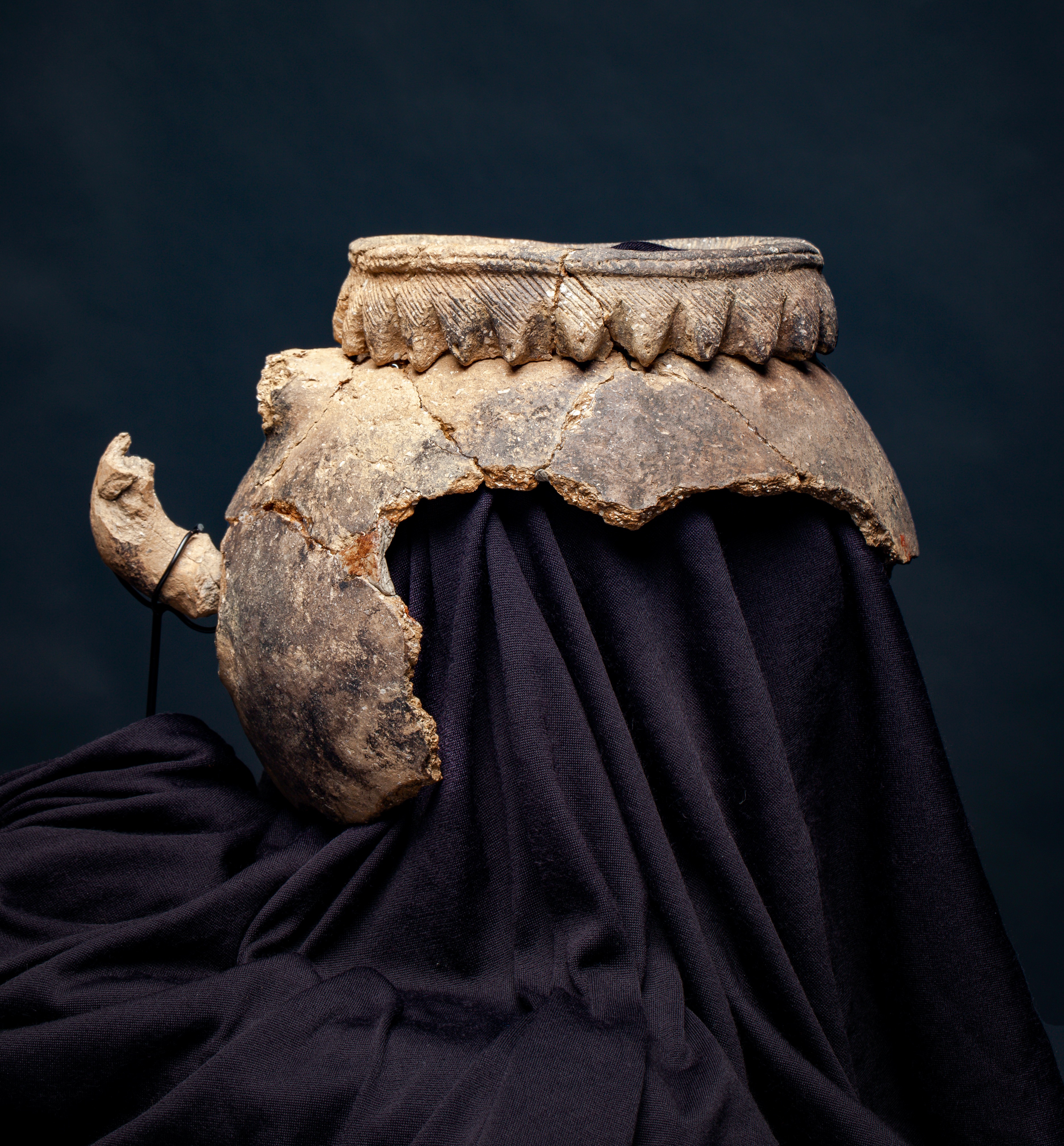
  • The Pot: Linking Three Cultures at Sylvester Manor

    By Donnamarie Barnes & The John Adams Institute

    In this short conversation with The John Adams Institute, Donnamarie Barnes, the Director of History & Heritage at Sylvester Manor, explains a transatlantic story. In this excerpt, she tells the story of the transatlantic slave trade through a seemingly innocuous archeological finding: a stone pot.